Reliable Roof Replacement: Expert Craftsmanship for Lasting Protection
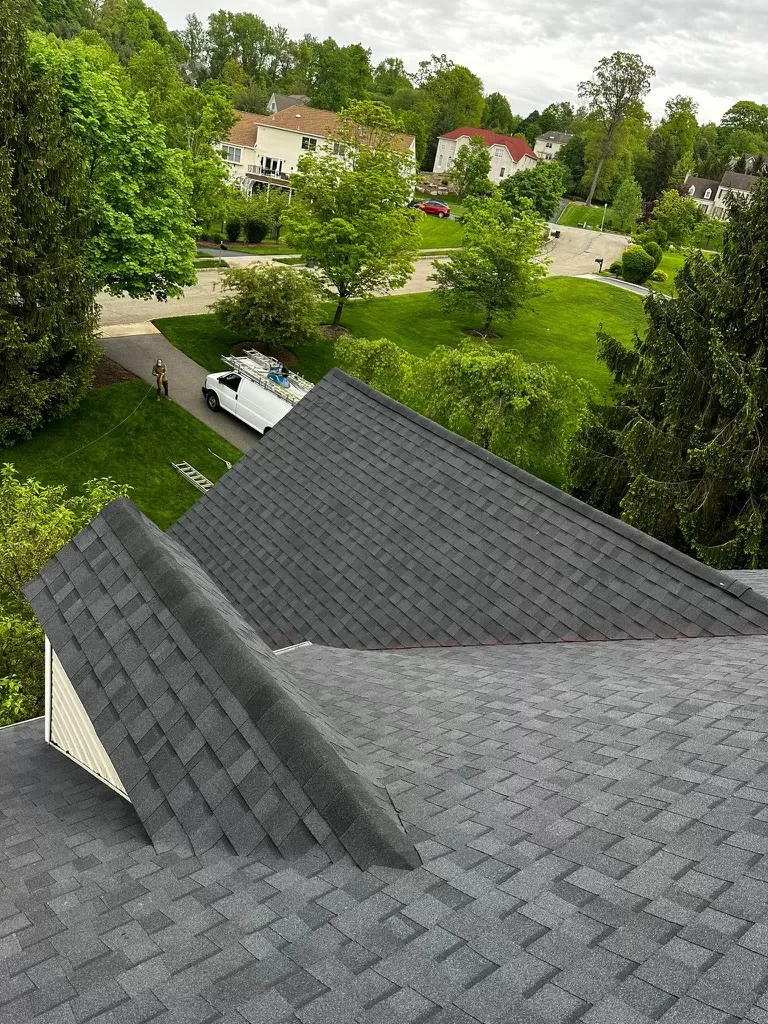
A professional roof replacement is one of the most important improvements a homeowner can make to protect a property, strengthen its exterior, and maintain its long-term value. A properly installed roofing system does more than create an attractive finish. It helps protect the home from rain, wind, snow, moisture, and changing temperatures while providing a durable covering for the structure beneath it. The completed roofing project shown in this photograph demonstrates how consistent asphalt shingles, carefully finished roof ridges, and attention to architectural details can create a clean, uniform appearance across a complex residential roof.
The photograph presents a finished roof covered with gray asphalt shingles. Multiple sloping sections meet at different angles, creating a distinctive roof layout with several ridges and intersecting planes. The matching ridge caps follow the roof’s raised edges and transitions, while the consistent shingle pattern gives the finished surface a coordinated appearance. The surrounding landscape and light-colored exterior provide a natural contrast to the darker roofing material.
At ALL PRO Roofing & Chimney, a successful roofing project should combine visual appeal with appropriate installation practices and dependable weather protection. Every roof has its own design, drainage requirements, and vulnerable connection points. Understanding these features is essential when planning a replacement, selecting materials, and ensuring that each section is completed correctly.
Why Professional Roof Replacement Matters
A roof is continuously exposed to environmental conditions that gradually affect roofing materials. Sunlight, heavy rain, strong winds, snow, and seasonal temperature changes can contribute to wear over time. As shingles age, they may lose granules, become brittle, curl, crack, or detach during severe weather. Flashing and other roof components can also deteriorate, creating potential pathways for water intrusion.
A professional roof replacement provides an opportunity to evaluate the existing roofing system and determine whether its components continue to offer adequate protection. Rather than focusing only on visible shingle damage, a comprehensive assessment considers the roof deck, underlayment, flashing, drainage, and ventilation where accessible.
The completed roof in the photograph illustrates the visual benefits of installing shingles consistently across several roof planes. A uniform surface can improve curb appeal and give the property a well-maintained appearance. However, the long-term value of a replacement depends on the quality of the work beneath the finished surface as well as the materials visible from the ground.
Proper planning is especially important when a roof includes multiple slopes, intersecting sections, and raised ridges. Each transition requires a suitable installation detail that works with the rest of the roofing system. A professional approach helps ensure that appearance, water management, and material compatibility are considered together.
Understanding the Roof’s Architectural Design
Residential roofs often contain more than one simple slope. Changes in roof height, intersecting planes, dormers, valleys, and ridges create an architectural layout that requires careful attention during installation.
The roof shown in the photograph includes several broad sloping surfaces and a prominent raised section running diagonally through the foreground. These intersecting sections make the roof visually distinctive and demonstrate why material placement must follow the building’s actual geometry.
Each roof plane needs consistent shingle alignment, appropriate coverage, and correctly finished edges. The installer must also understand how water travels down each slope and how adjoining surfaces connect. A detail that works on a straight roof edge may not be suitable for a valley or a ridge where two planes meet.
Before a roof replacement begins, a contractor should evaluate the roof’s overall layout and identify areas requiring specialized materials or flashing. This assessment helps establish the installation sequence and supports an organized approach to the project.
Careful planning also helps estimate the materials required for the roof’s different sections. Roof measurements must account for the total surface area, slope, waste allowance, ridge length, valleys, and other architectural details. Accurate planning helps reduce unnecessary delays and supports better coordination throughout the installation.
Asphalt Shingles and Their Role in Roof Protection
Asphalt shingles are a popular option for residential roofing because they offer a range of colors, styles, and performance characteristics. The gray shingles visible in this project create a balanced appearance that complements the home’s exterior while maintaining a consistent pattern across the roof.
Although color influences the overall appearance of a property, choosing shingles requires more than selecting a shade. Homeowners should consider product specifications, expected service life, wind-resistance ratings, warranty conditions, and compatibility with the proposed roofing system.
Different shingle products may have different fastening requirements, exposure dimensions, and installation details. Following the manufacturer’s instructions is essential because the specified installation method helps the product perform as intended.
Shingles are arranged in overlapping courses that direct rainwater down the roof toward the eaves. Correct alignment helps maintain consistent coverage and creates the orderly pattern visible in the photograph. Poor alignment or inconsistent exposure can affect the finished appearance and may indicate that the installation has not followed the product requirements.
The underlayment and other components beneath the shingles also contribute to the system’s performance. Shingles should not be treated as the only protective layer. A complete roofing assembly must be designed to manage water and protect the underlying structure.
Homeowners considering a replacement should ask their contractor to explain the available material options and how each product suits the roof’s design, exposure, and maintenance requirements.
The Importance of Straight Shingle Lines
Consistent shingle lines are among the most noticeable features of a professionally finished roof. In the photograph, the gray shingles create an orderly pattern across the broad roof surfaces, helping the completed installation look cohesive despite the roof’s multiple slopes.
Maintaining this appearance begins with accurate measurements and a suitable layout. Roofing professionals establish starting lines and follow the recommended exposure for the selected shingles. These reference points help keep successive courses aligned as the installation progresses.
On a large roof, small alignment errors can become more noticeable across the finished surface. Careful layout helps avoid irregular courses, inconsistent spacing, and distracting changes in the shingle pattern.
Alignment is not purely an aesthetic concern. Correct placement is part of installing shingles according to their intended design. Fasteners must also be positioned within the manufacturer’s designated fastening area, with the correct type and number of fasteners for the application.
The precise requirements vary by product, roof slope, and applicable code. For that reason, professional installers should rely on the relevant product instructions instead of applying the same fastening approach to every roof.
The finished roof in this photograph demonstrates the importance of a consistent overall pattern. Straight, orderly courses help create a refined appearance while reflecting the attention required during installation.
Ridge Caps and Properly Finished Roof Peaks
Ridge caps are a particularly important feature of the completed roof shown in the photograph. These roofing components cover the raised lines where adjoining roof planes meet, creating a finished edge while protecting the underlying ridge detail.
The prominent ridge in the foreground follows the roof’s changing geometry and separates adjoining sloping surfaces. Its dark, continuous appearance contrasts slightly with the surrounding shingle fields, helping define the roof’s architectural lines.
Ridge caps must be installed according to the roofing system’s specifications. Their placement, fastening, overlap, and alignment all influence the finished appearance and the protection provided at the ridge.
Depending on the roof design, a ridge may also form part of a ventilation system. Where a ventilated ridge is used, the installation must be coordinated with the attic’s ventilation design and the required intake openings. A ridge cap by itself does not establish whether a roof has adequate ventilation.
Installers should ensure that ridge components are compatible with the field shingles and other roofing products. Using suitable materials and following the prescribed installation sequence helps create a consistent finish and reduces the risk of problems at exposed transitions.
The ridge details visible in this project show how finishing components contribute to the roof’s overall appearance. They also illustrate why the final stages of installation deserve as much attention as the broad shingle surfaces.
Roof Valleys, Intersections, and Water Management
Roof valleys form where two sloping roof planes meet. Because runoff from adjoining surfaces can concentrate in these areas, valleys require carefully selected protective details and correct installation.
The roof’s multiple intersecting sections make water management an important consideration. Each plane must direct water toward the appropriate drainage edge without allowing runoff to enter vulnerable joints or accumulate behind roofing components.
Valley construction varies according to the roof design, shingle product, and approved installation method. Some systems use metal valley flashing, while others use manufacturer-approved shingle configurations. The selected method must be suitable for the application and installed according to applicable requirements.
Roof intersections should also be inspected for loose materials, damaged flashing, and irregular surfaces that could interfere with drainage. These details may be less visible from the ground than the main shingle field, but they are essential to the performance of the finished roof.
The U.S. Department of Energy provides general guidance on home weatherization and building-envelope performance through its Energy Saver resources. Property owners can use such resources to learn more about the relationship between building protection, moisture control, and energy performance.
A professional roofing contractor should explain how water is managed across the roof and identify any areas that require additional attention. Effective drainage helps protect the roofing materials and the building components beneath them.
Roof Decking and Preparation Before Installation
Although the roof decking is concealed beneath the finished shingles in this photograph, it remains one of the most important parts of the roofing system. The deck provides the supporting surface to which the roofing assembly is secured, so its condition must be evaluated before new materials are installed.
During a replacement, removing the existing shingles can reveal damaged wood, loose panels, moisture-related deterioration, or other conditions that were not apparent during the initial inspection. Areas that no longer provide a suitable fastening surface may require repair or replacement before installation continues.
A sound roof deck helps create a stable base for underlayment and shingles. Loose, uneven, or deteriorated decking can interfere with the installation and affect the quality of the finished surface.
Preparation should include checking the roof’s edges, ridges, valleys, and other transitions. The contractor should also consider whether existing flashing and drainage components can remain in service or need to be replaced as part of the project.
The exact work required depends on the roof’s condition. Not every replacement involves extensive decking repairs, and any additional work should be explained to the property owner before it proceeds whenever practical.
Thorough preparation helps ensure that the new roof is installed on an appropriate foundation. It also reduces the likelihood that concealed problems will undermine the completed installation.
Underlayment and Secondary Moisture Protection
Roofing underlayment is installed beneath the exterior roof covering to provide an additional layer of protection. Although shingles are designed to shed rainwater, underlayment helps protect the roof deck if moisture passes beneath the outer covering.
The appropriate underlayment depends on the roofing product, roof slope, climate, local building code, and manufacturer specifications. Some locations, including certain eaves and valleys, may require specialized membranes to address increased exposure to water or ice-related conditions.
Correct installation is essential. Underlayment must be positioned and overlapped in the prescribed direction, secured appropriately, and integrated with other roof components. Incorrect overlaps or poorly finished transitions can undermine the intended water-shedding design.
Weather protection is especially important while a roof is under construction. If the roof is partially exposed, the contractor must plan the work carefully and take suitable measures to protect the structure when rain or changing weather conditions pose a risk.
A completed roof conceals these protective layers, so homeowners may not be able to evaluate them from the finished appearance alone. Asking for an explanation of the installation process and, where available, progress photographs can help property owners understand the work completed beneath the shingles.
A dependable roof replacement combines visible craftsmanship with correctly installed protective layers that contribute to the system’s overall performance.
Flashing Around Roof Edges and Other Transitions
Flashing helps direct water away from vulnerable joints where roofing materials meet walls, chimneys, penetrations, or other building components. These connections require careful treatment because water can enter through an improperly protected joint even when the main shingle field appears to be in good condition.
During a roof replacement, existing flashing should be evaluated rather than automatically reused or discarded without inspection. The decision depends on its condition, compatibility with the new roofing system, and the requirements of the specific connection.
Drip edge is another important component along roof perimeters. When properly installed, it helps guide runoff away from exposed roof edges and supports the intended drainage path. The precise arrangement of drip edge and underlayment depends on the roof assembly and applicable installation requirements.
Other transitions may require step flashing, apron flashing, counterflashing, or specialized components. These details must be selected for the particular application and installed so that water is directed outward rather than behind the roofing materials.
The completed roof in the photograph has clean, clearly defined edges and transitions. While the image cannot establish the condition of concealed flashing, it highlights the importance of finishing each section carefully.
A thorough inspection of these areas helps homeowners understand whether the roofing system has been completed as intended and whether any additional maintenance is needed.
Roof Ventilation and Long-Term Performance
A well-designed roofing system should account for moisture management and, where applicable, attic ventilation. Ventilation requirements depend on the building’s construction, attic configuration, insulation, and local code.
In a conventional ventilated attic, intake and exhaust openings work together to support airflow. The arrangement must be appropriate for the roof’s design; simply adding an exhaust vent does not guarantee effective ventilation if the rest of the system is inadequate.
Moisture can also enter an attic through air leakage from the living space. Insulation, air sealing, and ventilation should therefore be considered as related parts of the building’s overall performance rather than as interchangeable solutions.
During roof replacement, a contractor may identify existing ventilation concerns or recommend further evaluation. Any proposed changes should be based on the actual building conditions and applicable requirements.
The photograph shows the exterior roof after the shingles and ridge components have been installed. It does not reveal the attic configuration or establish whether ventilation work was part of this project. Those details require a separate assessment.
Considering ventilation during a replacement can help homeowners address underlying concerns instead of focusing exclusively on the new exterior surface.
Maintaining a Newly Replaced Asphalt Shingle Roof
After a roof replacement, regular observation and basic maintenance can help homeowners identify developing problems before they become more serious. Even a properly installed roof remains exposed to weather and debris throughout its service life.
Gutters and downspouts should be kept clear so rainwater can drain away from the roof and foundation. Accumulated leaves, branches, and other debris may obstruct drainage and contribute to overflow around roof edges.
Following severe weather, homeowners can look for visible signs of missing shingles, fallen branches, or displaced materials from a safe location. Climbing onto a steep roof to investigate suspected damage is not recommended. A qualified roofing professional can perform a closer inspection when necessary.
Interior warning signs deserve attention as well. Water stains on ceilings, damp attic surfaces, or unexplained moisture may indicate a roofing issue, although plumbing leaks and condensation can produce similar symptoms. The source should be identified before repairs are selected.
Homeowners should retain installation records, warranty documents, product details, and available photographs of the completed work. These records can help when discussing maintenance questions or making a future insurance claim.
Maintenance needs vary according to the roof’s materials, exposure, surrounding trees, and local weather. Following the roofing manufacturer’s recommendations and arranging professional inspections when concerns arise can help preserve the roof’s condition.
When to Consider a Roof Replacement
A roof does not necessarily need to be replaced because of one isolated defect. Some problems can be resolved through targeted repairs, while widespread deterioration may make replacement a more practical option.
Signs that warrant professional evaluation include recurring leaks, extensive shingle damage, missing roofing materials, persistent flashing problems, sagging areas, and substantial deterioration associated with age. Storm damage may also justify an inspection to determine whether the roof remains serviceable.
The decision should take account of the roof’s overall condition, the extent of damage, previous repair history, and the likely durability of the available solutions. A professional inspection can help distinguish between a localized issue and a broader roofing-system problem.
ALL PRO Roofing & Chimney provides information about its roof replacement services and roofing services. These pages are useful starting points for homeowners who want to understand the company’s service options.
Before committing to a project, property owners should request a written estimate that explains the proposed scope of work, materials, expected installation process, and how concealed damage will be handled. They should also ask about relevant permits, insurance, warranties, and cleanup.
Making a decision based on the roof’s actual condition helps homeowners plan responsibly and choose a solution that meets their property’s needs.
Professional Roofing Services From ALL PRO Roofing & Chimney
The completed roof shown in this photograph demonstrates how gray asphalt shingles and carefully finished ridge lines can create a uniform, attractive appearance across a complex residential roof. The multiple roof planes require a coordinated installation approach, with consistent shingle placement and appropriate detailing wherever surfaces meet.
For homeowners, the most important consideration is that a finished roof should provide more than a clean visual result. Its long-term performance depends on suitable materials, sound preparation, properly installed underlayment, effective drainage, and careful attention to roof transitions.
ALL PRO Roofing & Chimney offers roofing services that include roof replacement, roof repair, and roof installation. Homeowners can explore the company’s services online and discuss the condition of their existing roof to determine which solution may be appropriate.
If your shingles are deteriorating, leaks keep returning, or severe weather has raised concerns about the condition of your roof, arranging a professional assessment is a sensible next step. An inspection can help identify visible problems, explain the available options, and clarify whether repair or replacement is warranted.
Learn more through the official ALL PRO Roofing & Chimney website, or review the company’s roof replacement information to understand the service and request an estimate.
A dependable roof begins with careful evaluation and continues through every stage of installation. By prioritizing quality workmanship, appropriate roofing materials, and attention to the details that protect the structure, homeowners can invest in a roof designed to complement their property and provide reliable protection for years to come.