Roof leaking right now? Call (201) 773-6635 for 24/7 emergency service

Roof damage repair

Storm, wind & tree damage repair in New Jersey

Nor’easters, summer storms, heavy snow, and falling limbs can damage a roof in minutes. We secure the roof, assess what’s broken, including the parts you can’t see from the ground, and repair it properly.

  • 24/7 emergency tarping
  • Free damage inspection & estimate
  • Up to 20% off repairs
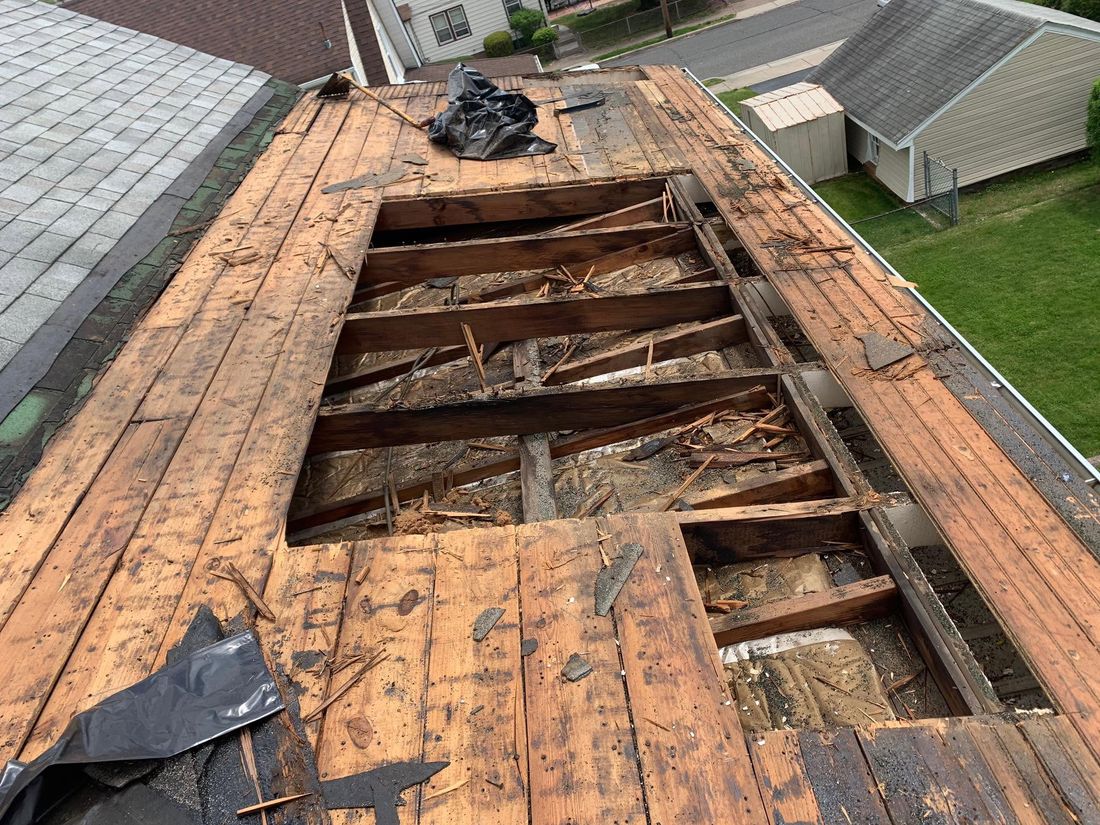
Rotted plank roof decking cut open to show the framing and attic insulation underneath
Rotted decking opened to the framing

Warning signs

Common types of roof damage

Some damage is obvious. Some only shows up weeks later as a leak.
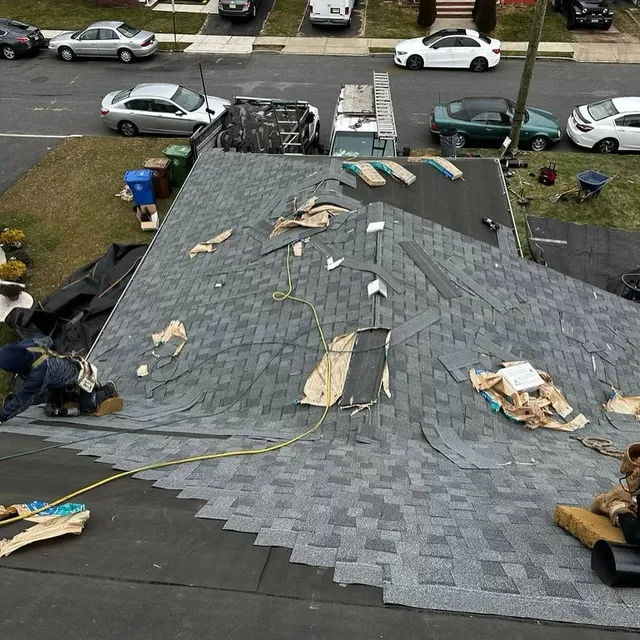
  • Gray shingle roof with torn and loose shingle pieces scattered across it, crew working at the edge

    Wind damage

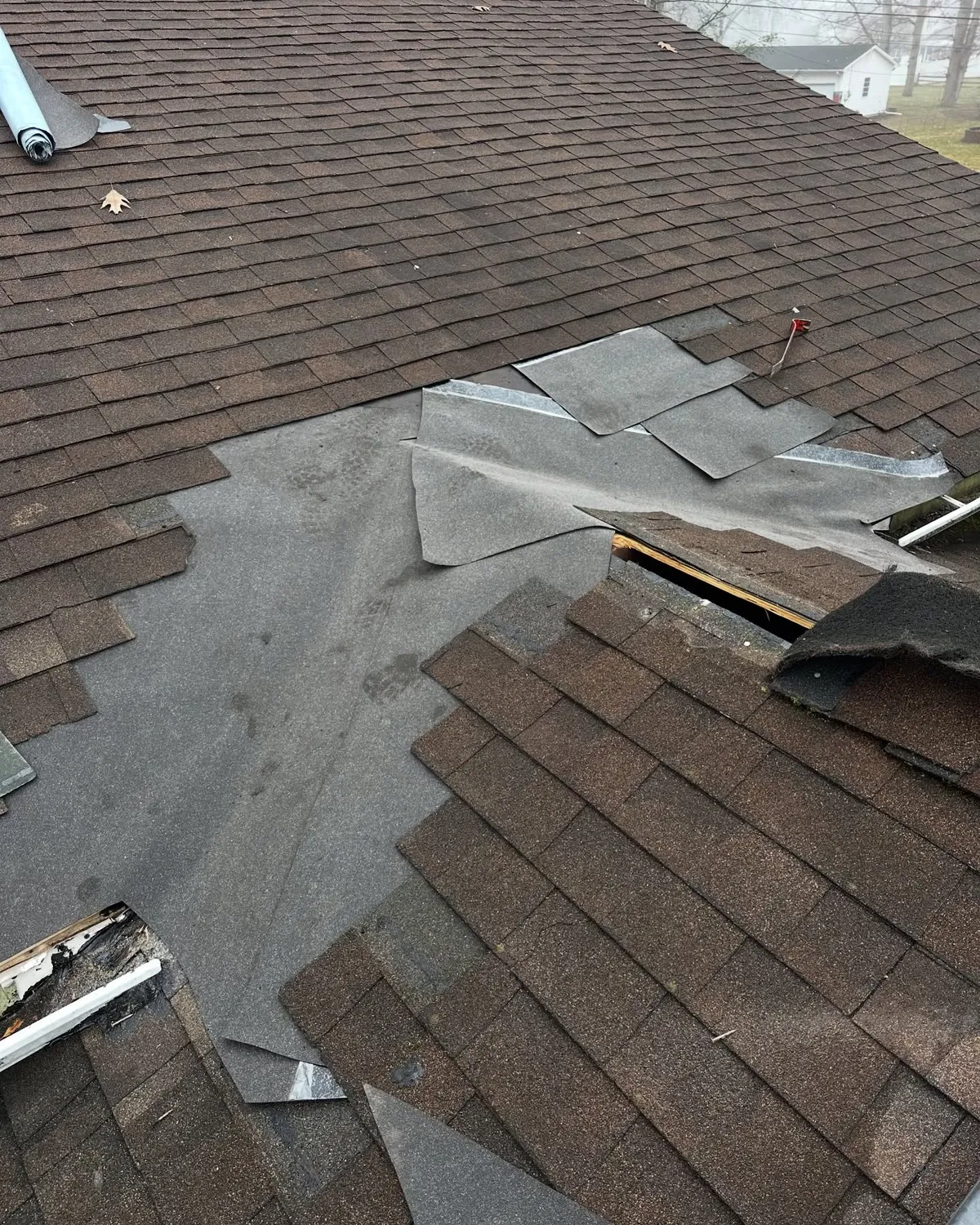
    Lifted, creased, or missing shingles, often along edges, ridges, and corners.

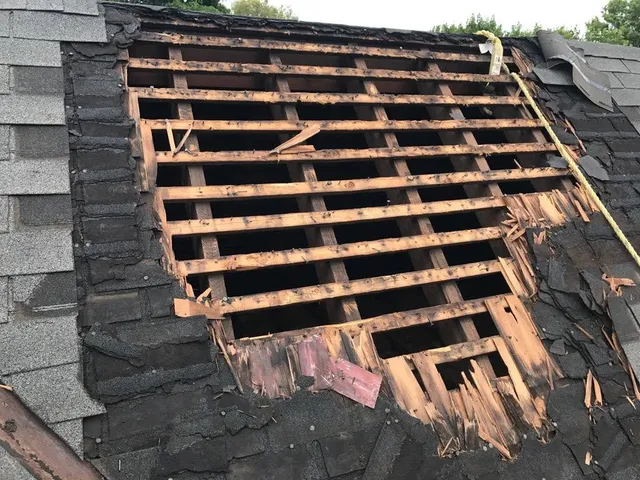
  • Section of roof with shingles and boards broken away, exposing the roof framing

    Fallen trees and limbs

    Punctured or cracked shingles, broken decking, and in serious cases damaged rafters.

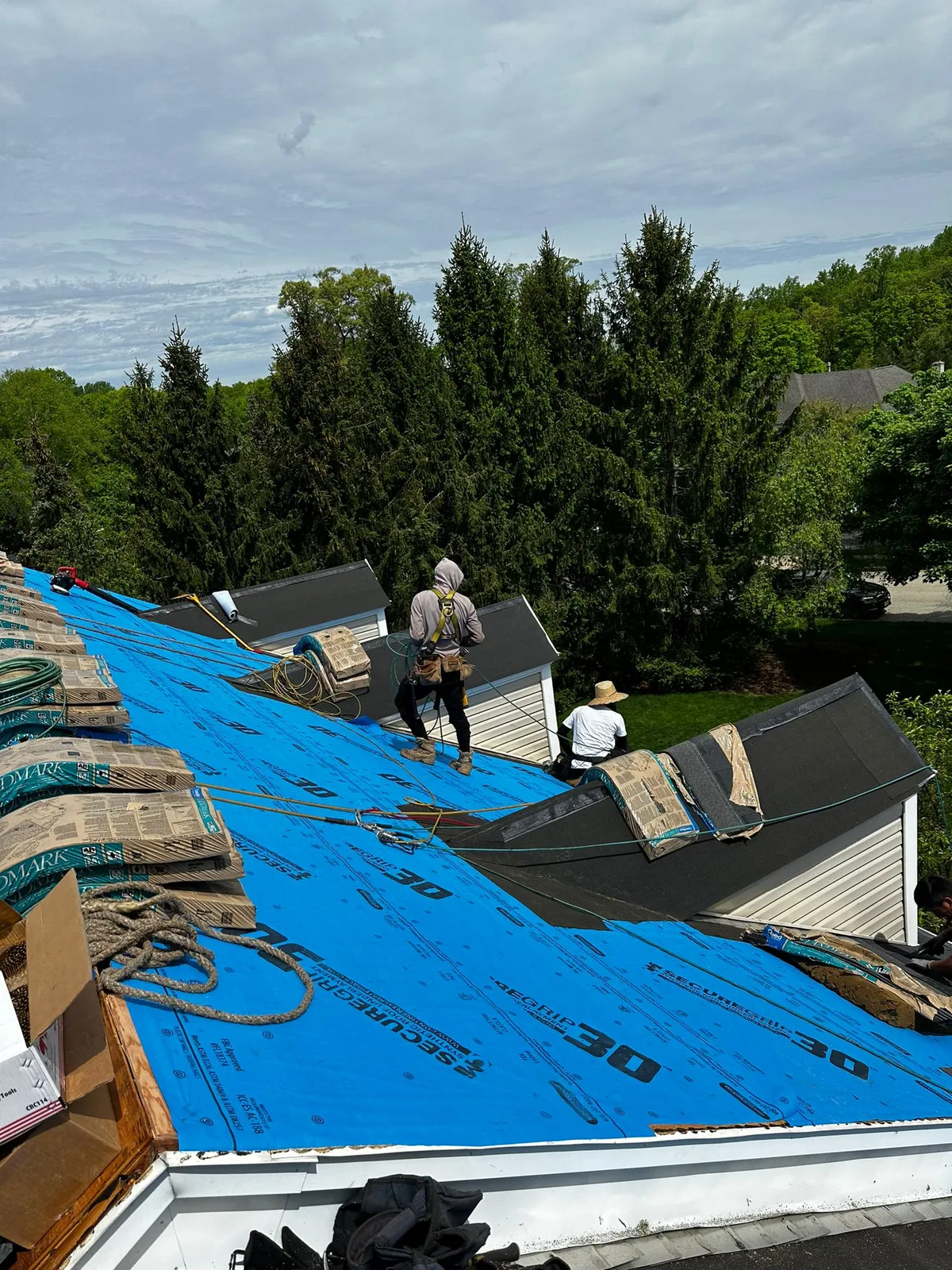
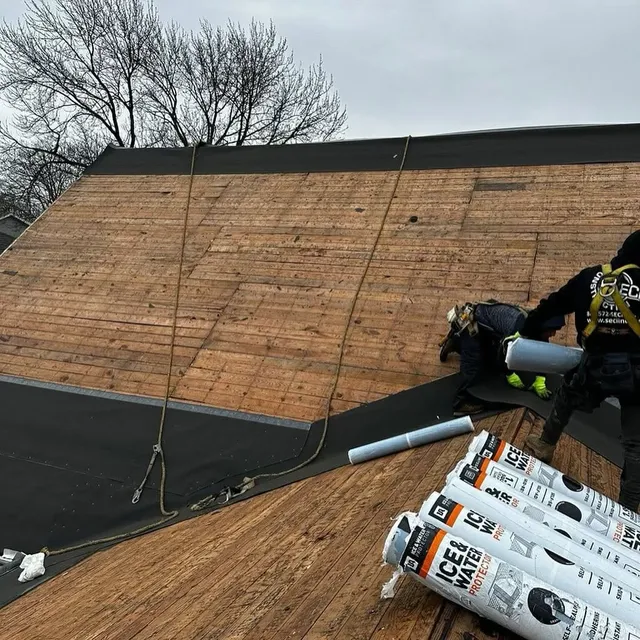
  • Rolls of ice and water shield membrane on old plank decking during a roof replacement

    Ice dams and heavy snow

    Ice at the eaves can push water under shingles; heavy snow loads stress the structure.

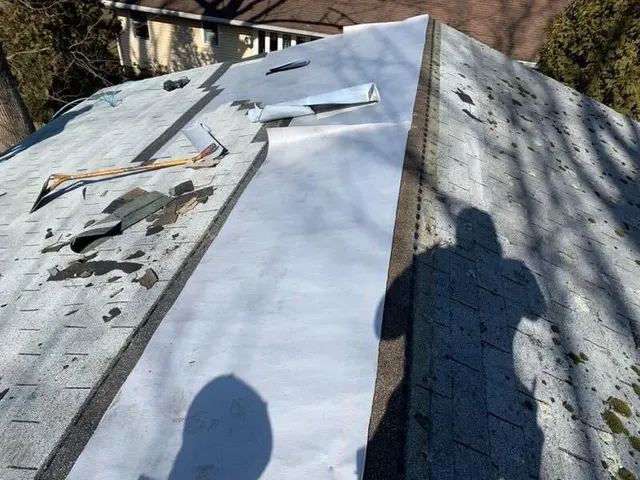
  • Worn, patchy shingles on one side of a ridge and new white underlayment on the other

    Hail

    Bruised or cracked shingles and dented vents, gutters, and flashing.

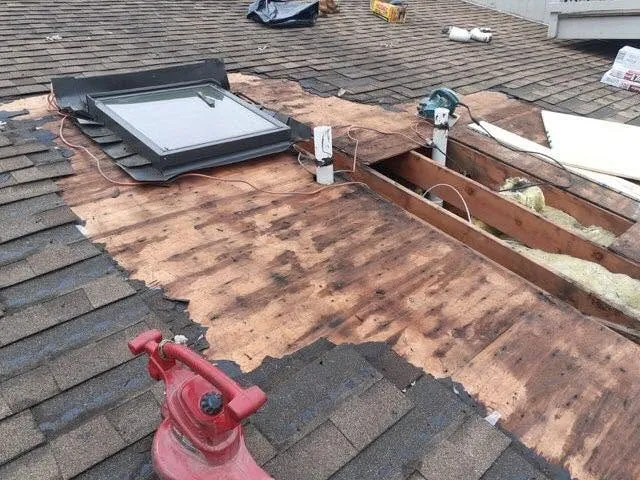
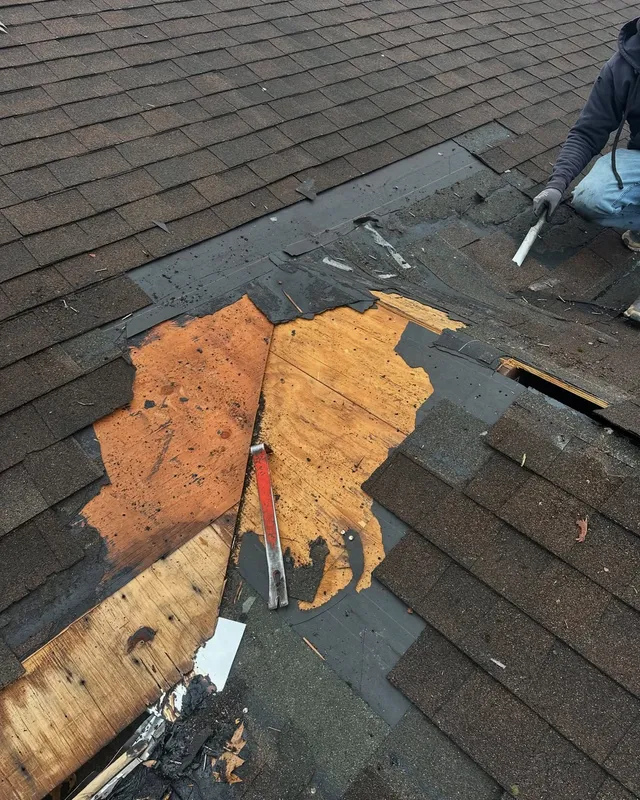
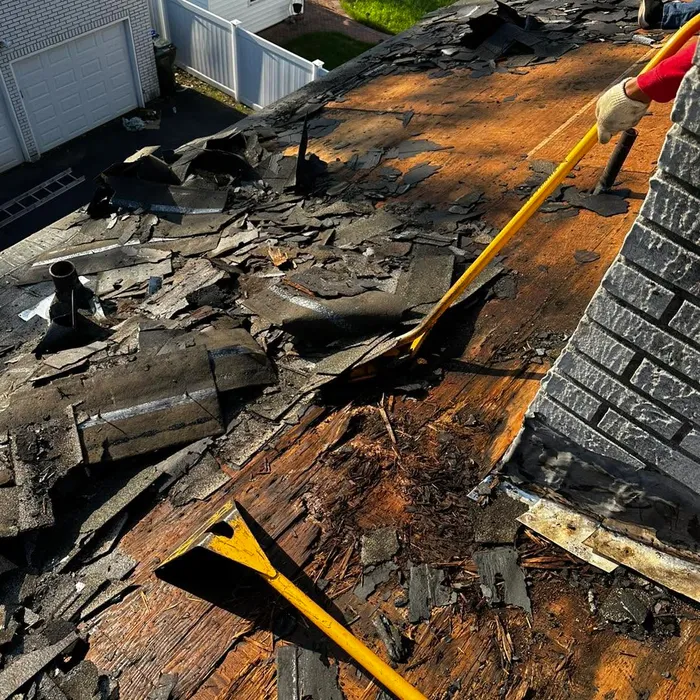
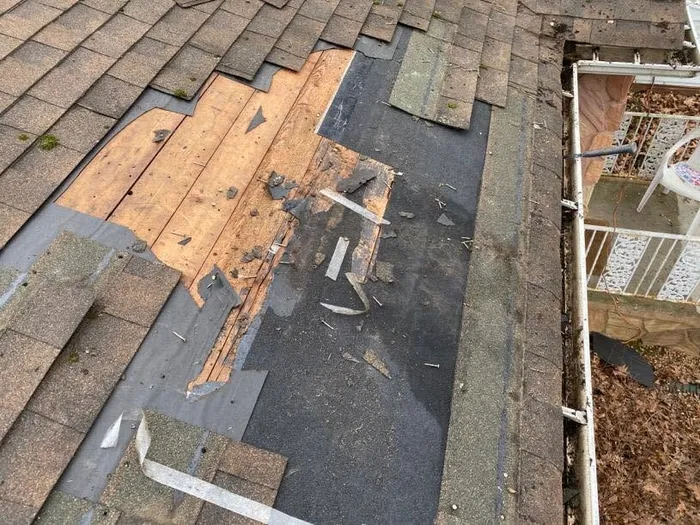
  • Brown shingles pulled back to show rotted, delaminated roof decking during a repair

    Hidden decking damage

    Water that got in during a storm can rot the boards under shingles that look fine.

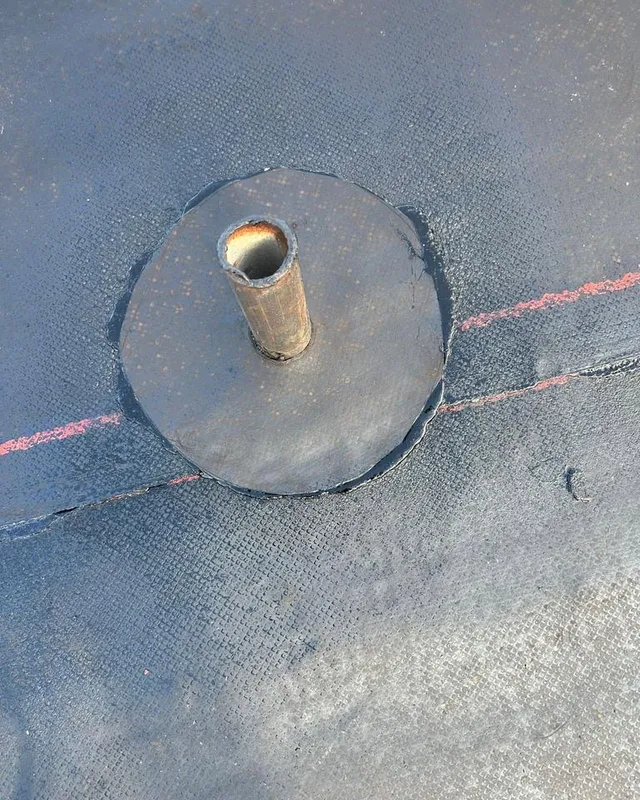
  • Vent pipe flashing sealed into a new flat roof membrane

    Animal damage

    Squirrels and other animals can chew through vents, soffits, and roof edges.

Step by step

After a storm: what to do

Call 24/7: (201) 773-6635

Many homeowners policies cover sudden damage from wind or falling trees, but not normal wear. Your insurer can tell you what your policy covers.

  1. Stay safe. Keep away from downed power lines and don’t climb onto a damaged or wet roof.
  2. If a tree is on the house, call a tree service to remove it before roof repairs begin.
  3. Take photos of the damage outside and any water inside, for your records and your insurer.
  4. Move valuables away from leaks and catch dripping water.
  5. Call us. We can tarp the roof to stop more water from getting in.
  6. Contact your insurance company to ask about your coverage.

What we do

How we repair storm damage

Temporary protection first, then a permanent repair.
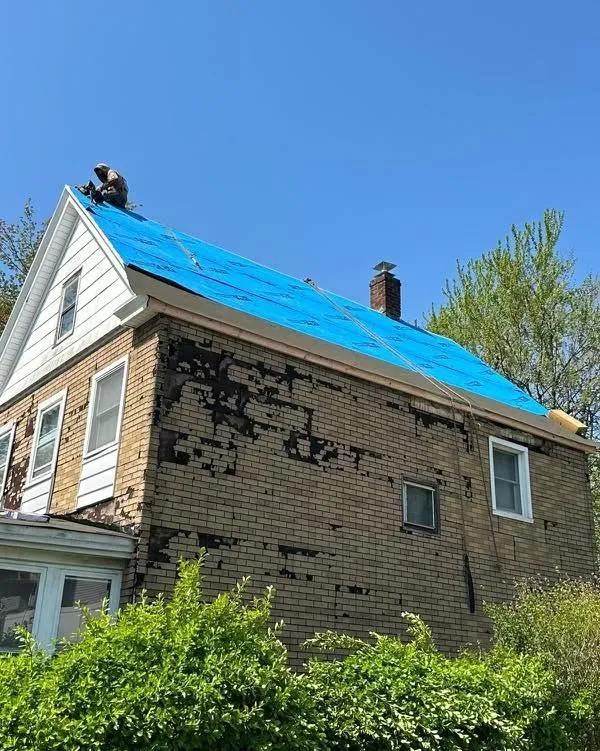
  • Emergency tarpingA secured tarp over the damaged area to keep water out until the repair is made.
  • Shingle and flashing repairTorn, missing, and lifted shingles and bent flashing replaced and sealed.
  • Decking replacementBroken or water-damaged roof boards cut out and replaced with new plywood.
  • Framing repairDamaged roof framing repaired so the new roof has solid support.
  • Gutter and vent repairDented or torn-off gutters, vents, and pipe boots repaired or replaced.
  • Replacement when neededIf the damage is widespread or the roof was already worn, we’ll explain the replacement option.
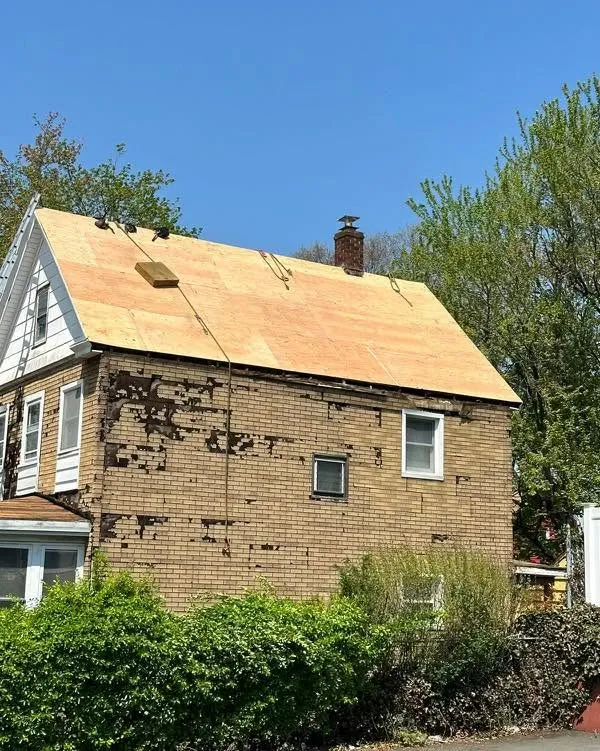
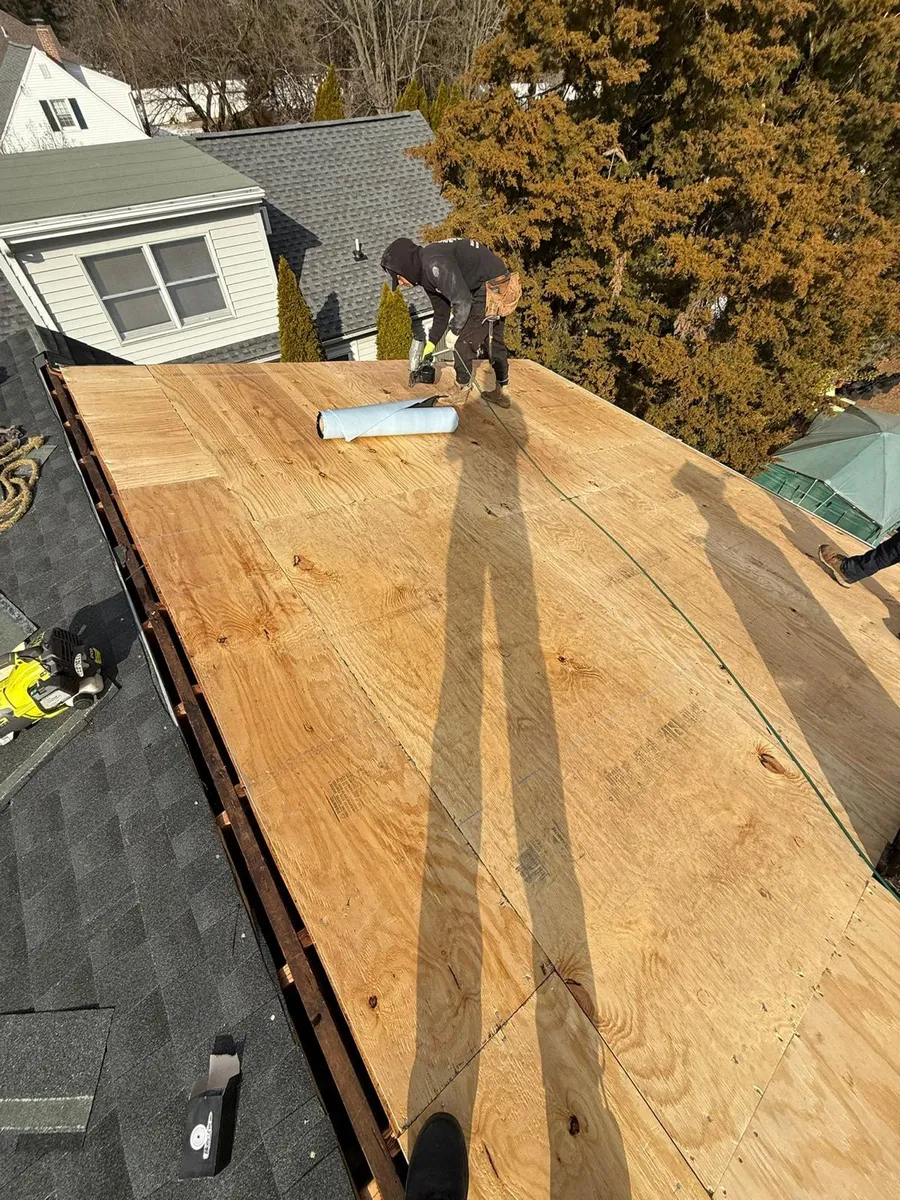
Roofer fastening new plywood decking to a stripped roof before underlayment goes on
Replacing damaged roof decking

How it works

From damage to repaired

  1. Call us

    Day or night. Tell us what happened and whether water is getting in.

  2. Secure the roof

    If needed, we tarp the damaged area to prevent more water damage.

  3. Inspect and estimate

    We check the whole roof, not just the obvious damage, and give you a written estimate.

  4. Permanent repair

    We repair the decking, framing, shingles, and flashing, and clean up.

Storm damage guide

Storm damage and your roof: a New Jersey homeowner’s guide

New Jersey gets a little of everything: nor’easters and heavy snow in winter, thunderstorms and the occasional hail in summer, and the remnants of tropical storms in late summer and fall. Superstorm Sandy in 2012 showed how much damage one storm can do. Knowing what to look for, and what to do next, protects both your roof and your insurance claim.

Storm damage by season

Winter brings wind-driven rain, heavy wet snow, and ice dams that force water under shingles. Spring and summer thunderstorms bring sudden gusts, falling limbs, and sometimes hail. Late-summer and fall tropical systems combine long periods of rain with strong wind, which is when weak flashing and older roofs tend to give up. Homes near the Shore see stronger winds; inland neighborhoods with mature trees see more limb damage.

How to check your roof safely after a storm

Stay off the roof. You can learn a lot from the ground and the attic:

  • Look for shingles or pieces of shingle in the yard and gutters
  • Scan the roof with binoculars for missing, lifted, or creased shingles
  • Check gutters, downspouts, and roof vents for dents or damage
  • Look for branches resting on the roof or hanging over it
  • In the attic, look for wet insulation, damp wood, or light coming through

Trees and your roof

Large trees are a big part of what makes North Jersey neighborhoods beautiful, and the leading cause of serious roof damage in storms. Branches that hang over the roof scrape shingles in the wind, drop debris that clogs gutters, and can fall in a storm. Having a tree service trim overhanging limbs before storm season is one of the best ways to protect your roof.

Working with your insurance company

Many homeowners policies cover sudden damage from wind or falling trees but not damage from age and wear. Read your policy or call your insurer to find out what’s covered and how long you have to file. Take photos of the damage before anything is moved or repaired, keep receipts for emergency tarping and temporary repairs, and get a written estimate that describes the damage and the repair. Most policies also expect you to take reasonable steps to prevent further damage, which is what a tarp is for.

Damage you can’t see yet

Not all storm damage shows up right away. A creased shingle may hold for months before it tears. Water that got in during the storm can soak the decking and insulation without staining a ceiling until much later. If a major storm hit your area, an inspection is worth it even if everything looks fine.
Current deals

Save on your roof damage repair

Mention the deal when you request your free estimate.

  • up to20%off

    Up to 20% off any roof repair

    Leaks, missing shingles, flashing, or storm damage. Save on any roof repair job.

  • $0estimate

    Free roof estimate

    We inspect the roof in person and explain your options. No cost and no obligation.

    Claim this deal Free on-site estimate. No obligation to hire.
  • 10%off

    10% veteran discount

    Thank you for your service. Veterans save 10% on their roofing project.

Google reviews

What homeowners say about us

Five-star reviews from Google

FAQ

Roof Damage Repair questions

Still have a question? Call (201) 773-6635 or email info@allprosnj.com.

Will my insurance pay for storm damage?

Many policies cover sudden damage, such as wind or a fallen tree, but not gradual wear and aging. Coverage varies, so ask your insurer. Our written estimate describes the damage and the repair, which you can share with them.

A tree fell on my roof. What should I do first?

Make sure everyone is safe and stay away from any downed lines. If there is structural damage or a hazard, call 911. Have a tree service remove the tree, then we can tarp and repair the roof.

My roof looks fine from the ground. Could it still be damaged?

Yes. Creased shingles, loosened flashing, and small punctures are hard to see from below, and water can soak the decking without showing up inside right away. An inspection after a major storm is worth it.

Is a tarp a permanent fix?

No. A tarp is temporary protection to keep water out until the roof is repaired. The permanent repair should follow as soon as practical.

Can you fix ice dam damage?

Yes. We repair the shingles, flashing, and decking damaged by ice dams. Repeated ice dams often point to attic ventilation or insulation issues, which we can point out during the inspection.

Service area

Roof Damage Repair across North & Central NJ

We serve homeowners in 14 counties. Choose yours for local information and the towns we cover.

Related services

Get a free roof damage repair estimate

Tell us what’s happening with your roof. We’ll inspect it, explain your options, and give you a free, no-obligation estimate.

Call NowFree Estimate