Roof Replacement: 7 Essential Steps for a Stronger Roof
A roof replacement is a major home improvement project that requires much more than installing a new layer of shingles. A properly completed roofing system depends on careful preparation, accurate installation, appropriate materials, attention to roof transitions, and professional workmanship throughout every stage of the project.
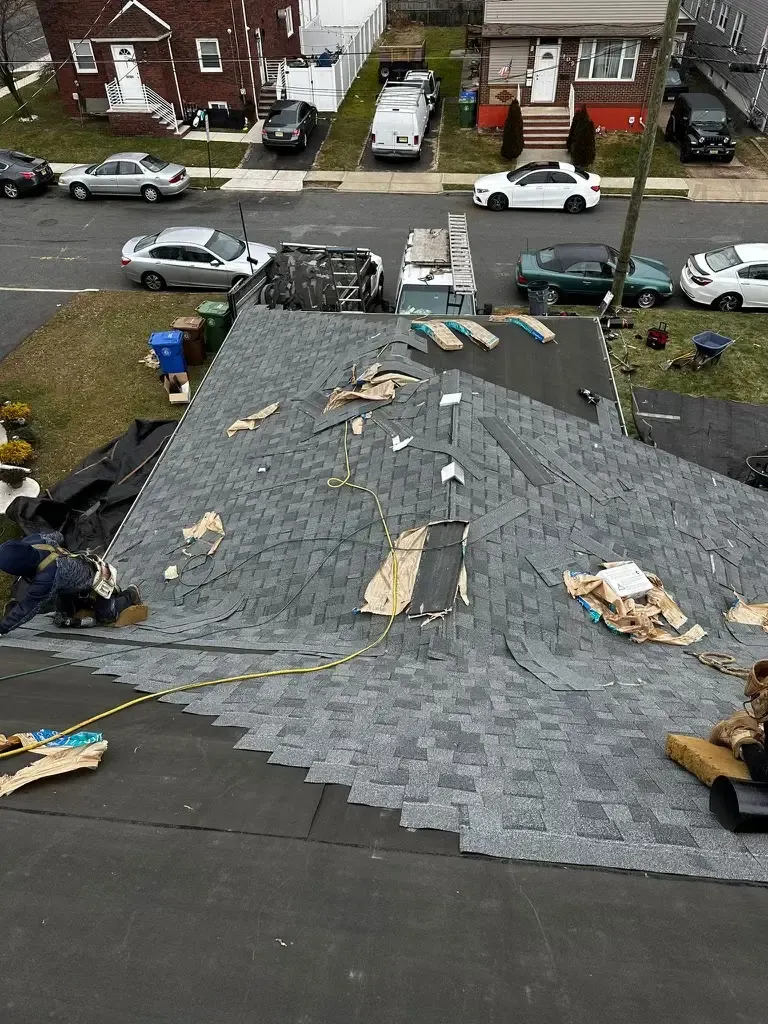
The photograph accompanying this article captures an important moment during an active residential roofing project. The roof is clearly in the installation stage, with new asphalt shingles being placed across the roof surface while other areas remain under construction. Roofing materials, installation equipment, packaging, safety gear, and tools are visible across the work area, providing a realistic look at what happens during a professional roofing project.
Unlike a finished-roof photograph, this image shows the process behind the final result. It demonstrates that professional roofing involves multiple stages, each contributing to the performance and appearance of the completed system.
The partially installed shingles reveal how the roofing crew progresses across the structure while maintaining consistent courses and working around changes in roof direction. The visible ridge and intersecting roof sections also demonstrate why experience and careful planning are important when working on a residential roof with multiple planes.
For homeowners considering a new roof, understanding what happens during installation can make the entire process easier to evaluate. A professional roof replacement should be approached as a complete roofing system rather than simply a cosmetic change to the outside of a home.
What the Roofing Project in the Photo Shows
The photograph provides a close look at an active shingle installation. A substantial portion of the roof already has new asphalt shingles, while other areas show materials and work still underway.
This is an important distinction because roofing projects rarely appear perfectly finished while the crew is working. During installation, materials need to be staged, old components may be removed, new shingles are distributed across the roof, and different sections are completed progressively.
The image shows several bundles and pieces of roofing material positioned on the roof, along with tools and equipment being used by the crew. These elements are normal parts of an active roofing worksite.
The newly installed shingles have a consistent gray appearance and are being arranged in organized courses across the roof. This consistency is essential because asphalt shingles are designed to work together as an overlapping roofing surface.
The photograph also shows a roof with multiple sections and changes in direction. Areas around ridges and transitions require careful attention because the roofing materials must connect properly as the roof geometry changes.
The final appearance of a roof depends heavily on how these details are handled during installation.
Why Preparation Comes Before New Shingles
One of the most important parts of a roof replacement happens before the new shingles are installed.
Preparation allows roofing professionals to evaluate the existing roof and determine what condition the underlying structure is in. Depending on the project, this can include removing old roofing materials, inspecting the roof deck, addressing damaged areas, preparing the surface, and installing appropriate protective layers.
A homeowner generally sees only the finished shingles once the project is complete. However, the shingles represent only one part of a complete roofing system.
The roof deck provides the base for the roofing materials. Underlayment and other protective components can provide additional protection beneath the shingles. Flashing and edge details help manage vulnerable areas where water could otherwise enter.
Because these components are largely hidden after installation, the preparation stage is extremely important.
The photograph shows the project after a substantial amount of shingle installation has already taken place, but the equipment and materials still visible across the roof remind us that the final appearance is the result of several coordinated stages.
Professional roofing work begins with understanding the condition of the existing system before deciding how the new system should be installed.
For homeowners interested in the company’s approach to replacement projects, All Pro provides information about its roof replacement services.
Installing Asphalt Shingles With Consistency
The large shingle field shown in the photograph makes installation consistency especially important.
Asphalt shingles are installed in overlapping courses that create a continuous weather-resistant surface. Each course needs to be positioned correctly in relation to the surrounding courses so the finished roofing system performs as intended.
The photograph shows the crew progressing across the roof while maintaining a relatively uniform pattern. The individual shingles create a repeated appearance across the surface, which will become even more visually consistent as the remaining sections are completed.
Professional installation also involves following the manufacturer’s instructions for the selected roofing product. Different shingle systems can have specific requirements for fastening, starter courses, exposure, layout, and ridge treatment.
For example, GAF’s installation information explains that starter strips are installed at roof edges and are part of the overall roofing system. Their installation guidance also emphasizes proper positioning and fastening at eaves and rake edges.
This illustrates an important point for homeowners: the visible shingle field is only one part of a properly installed roof.
The quality of the installation depends on how the entire system is assembled.
The Importance of Starter Shingles and Roof Edges
Roof edges may appear simple, but they are important parts of a roofing system.
Starter shingles or starter strips form the beginning of the shingle installation along appropriate edges. They help establish the first course and contribute to the overall weather and wind performance of the roofing system.
The roof shown in the photograph contains broad slopes and several perimeter edges where the installation needs to remain accurate and consistent.
A properly installed edge helps create a clean transition between the roof surface and the exterior of the home. It also works with other roofing components to help manage water as it moves toward the edge of the structure.
GAF notes that starter strips are designed to help protect against shingle blow-off at eaves and rakes and form part of a complete roofing system.
These details are easy to overlook when viewing a finished roof from the ground. During construction, however, they are part of the installation process that helps create a dependable final result.
Professional roofing contractors understand that a strong roof is built from many interconnected details rather than one single material.
Managing Roof Ridges and Transitions
The roof in this photograph includes a prominent ridge and several intersecting sections. These areas require careful workmanship because the roofing surface changes direction.
Ridges occur where two roof planes meet at the highest portion of the structure. They require appropriate finishing materials and, depending on the system, may also incorporate ventilation components.
Transitions between different roof planes can also create areas where water movement needs to be carefully considered.
A professional roofing crew must maintain the correct relationship between the shingles and the roof’s geometry as installation progresses. Cutting, positioning, fastening, and overlapping materials correctly becomes particularly important around these areas.
The image provides a useful behind-the-scenes view because the ridge area is still being worked on. This makes it easier to see how different portions of the roofing system come together rather than looking only at a completed surface.
The finished appearance of a ridge may look simple, but achieving that result requires careful installation.
Protecting the Roof From Water
One of the primary functions of any roofing system is to help keep water away from the interior of the structure.
Rainwater should move across the roof surface and toward the appropriate drainage points. Roofing materials, underlayment, flashing, valleys, edges, and other components work together to support this process.
The roof shown in the photograph has multiple slopes, meaning water movement needs to be considered across different sections of the structure.
This is another reason why professional roof replacement should focus on the complete roofing system rather than simply the visible shingles.
A properly installed shingle field can provide an attractive appearance, but the performance of the roof also depends on what lies beneath and around those shingles.
Areas around penetrations, valleys, ridges, sidewalls, and other transitions can require additional attention. These locations should be evaluated and installed according to the roofing system’s requirements.
The National Roofing Contractors Association emphasizes inspection and preventative maintenance for asphalt shingle roof systems and identifies the importance of keeping the roof system properly maintained.
Good installation establishes the foundation, while proper maintenance helps preserve performance afterward.
Why Worksite Organization Matters
The photograph shows a genuine roofing worksite, including materials, packaging, tools, hoses, safety equipment, and other installation items.
A roofing project naturally produces a temporary work environment. Shingle bundles have to be moved onto the roof, packaging has to be managed, and equipment needs to be positioned where the crew can work efficiently.
However, organization and housekeeping remain important throughout the project.
A professional roofing crew needs to work carefully around the structure and surrounding property while keeping materials organized and maintaining safe working practices.
The presence of equipment in the photograph should not be interpreted as a sign of an unfinished or poorly managed project. Instead, it demonstrates that the image was captured while the crew was actively performing the installation.
The important evaluation should focus on the quality of the installation itself and how the work progresses toward completion.
As the project advances, temporary materials and equipment are removed, the roof is completed, and the property is cleaned.
The final result should represent the quality of the work performed during every stage.
How Professional Workmanship Affects the Finished Roof
A new roof can use high-quality materials and still perform poorly if those materials are not installed correctly.
Professional workmanship is therefore one of the most important elements of a successful roof replacement.
Installation requires attention to shingle alignment, fastening, starter courses, edges, valleys, ridges, flashing, ventilation, and other roofing components.
The photograph demonstrates this through the repeated shingle courses across the roof surface. The installation pattern needs to remain consistent even as the crew moves around the structure and works through different roof sections.
A professional roofer also needs to understand how the different components of a roofing system interact.
This is especially important when a roof contains multiple slopes and intersecting sections, as seen in the photograph.
The goal is not simply to make the roof look new. The goal is to create a roofing system that provides reliable protection while maintaining a clean, professional appearance.
All Pro Roofing and Chimney describes its roofing services as including roof replacement, roof repair, roof installation, asphalt shingle roofing, roof framing, roof construction, waterproofing, flashing repair, and other roofing solutions.
When Roof Replacement Makes More Sense Than Repair
Not every roofing problem requires complete replacement.
A professional inspection should determine whether a localized repair is sufficient or whether the existing roofing system has reached a point where replacement makes more sense.
Minor or isolated damage can sometimes be repaired. A small number of damaged shingles, localized flashing problems, or a specific leak source may not require replacing the entire roof.
However, extensive deterioration, widespread damage, repeated leaks, significant storm damage, or an aging roofing system may justify a larger project.
The condition of the underlying roof deck can also influence the decision. Once roofing materials are removed, contractors can inspect areas that may not have been visible during a simple exterior inspection.
This is why homeowners should avoid making major roofing decisions based solely on one visible problem.
All Pro’s roof repair information explains that roofing issues can range from minor leaks and storm damage to situations requiring more substantial work, and that professional evaluation can help determine the appropriate solution.
A good roofing contractor should explain what is wrong, what options are available, and why a particular solution is recommended.
The purpose of an inspection is to make an informed decision rather than automatically choose the most extensive option.
Signs That a Roof May Need Professional Attention
Homeowners should pay attention to changes in their roofing system.
Missing or damaged shingles, recurring leaks, visible deterioration, damaged flashing, water stains, and signs of storm damage can all justify a professional evaluation.
Some roofing problems may be obvious from the ground, while others can only be identified through a more detailed inspection.
The National Roofing Contractors Association recommends preventative roof inspections and notes that inspections can be particularly useful after severe weather events. It also advises homeowners without appropriate experience and equipment not to walk on steep roofs themselves.
That advice is especially important because roofing surfaces can be hazardous.
If a homeowner notices a potential problem, the safest approach is to contact an experienced roofing professional rather than attempting a detailed inspection or repair on a steep roof.
Early attention can also help prevent a relatively manageable roofing problem from becoming a more extensive issue.
What Homeowners Should Expect During a Roof Replacement
Every project is different, but a professional replacement generally follows a logical sequence.
The project begins with an evaluation of the existing roof and the property’s specific requirements. Once the scope of work is established, materials and equipment are prepared.
The existing roofing materials may then be removed as necessary, exposing the underlying surface for inspection.
Any unsuitable or damaged areas can be addressed before the new roofing system is installed.
Protective components are then installed as required, followed by starter materials and the primary shingle field.
As the installation progresses, the crew works through roof planes, edges, valleys, ridges, and other details.
The photograph captures this middle stage particularly well. Much of the shingle surface is already installed, while materials and tools remain on the roof because the crew is still working.
Eventually, the remaining sections are completed, ridge and edge details are finished, debris and unused materials are removed, and the project receives its final review.
This sequence helps explain why a roof replacement should be evaluated as a process rather than a single installation event.
The Value of a Professional Roofing Inspection
Before investing in a new roof, homeowners benefit from knowing the actual condition of their existing roofing system.
An inspection can help identify visible deterioration, leaks, storm damage, flashing issues, ventilation concerns, and other conditions that may affect the roof.
It can also help determine whether replacement is necessary or whether repair could provide an appropriate solution.
All Pro Roofing and Chimney offers a free, no-obligation in-house inspection and estimate, according to its current website.
This type of evaluation allows homeowners to discuss their concerns with a professional before committing to a major project.
For homeowners considering a replacement, this can be especially useful because roofing decisions involve both the visible exterior and the components beneath it.
A professional evaluation provides a stronger basis for planning the project.
Maintaining the New Roofing System
A new roof should still receive appropriate attention after installation.
Maintenance does not mean constantly walking across the roof or attempting repairs personally. Instead, homeowners can monitor the visible condition of the property, keep gutters and drainage areas clear, and arrange professional inspections when needed.
The NRCA recommends preventative maintenance and periodic inspections for residential roof systems. Its guidance also notes that inspections can be particularly important after severe weather.
Keeping surrounding drainage systems clear is also important because water needs a reliable path away from the structure.
If homeowners notice missing shingles, unusual stains, visible damage, or other changes, they should contact a roofing professional.
A well-maintained roof can provide valuable protection for the property, but maintenance and professional attention remain important throughout the life of the roofing system.
A Closer Look at the Work Behind a New Roof
The photograph provides something that a polished finished-roof image cannot: a look at the actual work involved in installing a new roofing system.
The gray asphalt shingles cover much of the roof, but the remaining materials and equipment reveal that the project is still progressing.
The crew is working across a roof with several planes and a defined ridge, requiring attention to layout and transitions.
The image also demonstrates why professional roofing is skilled construction work rather than a simple material installation.
Every visible shingle represents one component of a much larger system.
The final roof will eventually hide most of the preparation and installation process, leaving homeowners with a clean, finished surface. But the durability and appearance of that surface depend on what happens during the stages shown in this photograph.
That is why selecting an experienced roofing contractor is an important part of planning a replacement project.
A Stronger Roof Starts With Professional Planning
A successful roof replacement begins long before the final shingle is installed.
It starts with evaluating the existing roof, understanding the property’s needs, selecting suitable materials, preparing the work area, and developing an installation plan.
The installation then requires careful execution.
The photograph from this All Pro project demonstrates that process in action. The new shingles are being installed in organized courses while the crew works through the different sections of the roof.
The visible materials and tools show that this is an active construction stage, while the extensive shingle coverage shows how much progress has already been made.
For homeowners, the image is a useful reminder that the quality of a new roof depends on the work that happens behind the finished appearance.
At All Pro Roofing and Chimney, professional roofing services include roof replacement, roof repair, roof installation, asphalt shingle roofing, emergency roofing, and additional roofing solutions throughout New Jersey.
If your roof is showing signs of aging, damage, leaks, or deterioration, a professional inspection can help determine whether repair or replacement is the appropriate next step.
You can also contact All Pro through its free estimate page to request an inspection and discuss your roofing needs.
A professionally installed roof is an investment in the protection and condition of your property. With proper preparation, quality materials, careful installation, and ongoing maintenance, the finished roofing system can provide a strong and attractive exterior for years to come.
The project shown in this photograph is a clear example of the work that goes into that result. What may eventually look like a simple, uniform roof from the street is actually the product of detailed preparation, skilled installation, careful coordination, and attention to every part of the roofing system.
That is the real value of professional roof replacement: not just a new appearance, but a carefully constructed roofing system designed to protect the home from the elements and provide dependable performance.