Roof Replacement: 9 Essential Steps for a Strong, Reliable Roof
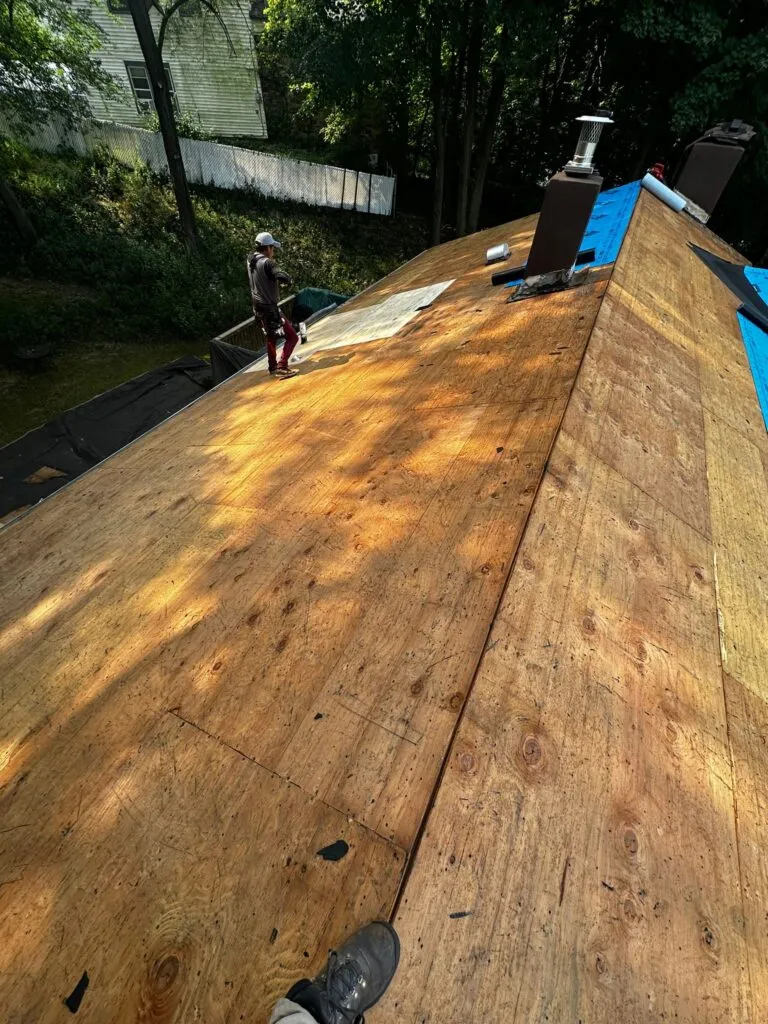
A roof replacement is much more than installing the final layer of shingles. The photograph for this project shows an important stage that is often hidden from view: a prepared wood roof deck exposed before the finished roofing material is installed.
The image shows large plywood panels across a sloped roof, a worker preparing the surface, protective material visible near the upper sections, and detailed work around roof penetrations and a chimney.
This stage is where careful roofing work begins.
Before shingles can provide the finished appearance homeowners expect, the underlying roof deck, seams, edges, penetrations, and protective layers must be addressed correctly.
The National Roofing Contractors Association identifies the roof covering, sheathing, structure, flashing, and drainage as key parts of a steep-slope roof system.
For homeowners considering roof replacement, the lesson is simple: what happens underneath the visible shingles matters.
ALL PRO Roof Repair & Installation provides roof repair, roof replacement, roof installation, asphalt shingle roofing, roof framing, waterproofing, flashing repair, and other roofing services.
1. Why the Roof Deck Matters
The roof deck is one of the most important hidden components of a roofing system.
It provides the substrate over which underlayment and the finished roof covering are installed. If the deck has deterioration, damage, excessive movement, or other problems, those conditions should be identified before the new roof covering is completed.
The visible plywood in the photograph makes this principle especially clear.
With the existing roof covering removed, the underlying surface can be inspected directly. This gives a roofing crew an opportunity to identify conditions that would not be visible once new shingles cover the area.
The NRCA describes sheathing as boards or sheet material fastened to roof rafters to cover a house or building. Its guidance also identifies the roof structure, flashing, drainage, and roof covering as important components of the complete roof system.
A professional roof replacement therefore considers the entire assembly, not just the material visible from the ground.
For homeowners, this is one reason a roofing estimate should be understood as a complete system rather than simply a price for shingles.
The condition of the deck, flashing, underlayment, ventilation, penetrations, and other components can influence the work required.
2. Preparing the Surface Before Roofing
Preparation is one of the most important phases of a roof replacement.
Once the old roofing material is removed, the crew can evaluate the exposed deck and prepare it for the next layers.
In the photograph, the large wood panels show the working surface clearly. The installation team is working across a sloped roof with several areas that require careful attention.
Panel seams, roof geometry, penetrations, and transitions all need to be considered before the finished covering is installed.
Preparation can include removing damaged material, securing appropriate sections, correcting unsuitable conditions, cleaning the working area, and making sure the substrate is ready for the next roofing components.
The precise procedure should be based on the roof design, applicable requirements, manufacturer instructions, and project conditions.
This is also where professional organization matters.
Roofing crews work on sloped surfaces at elevation, so materials and equipment must be managed carefully while the deck remains exposed.
A properly prepared substrate provides the starting point for the rest of the roof assembly.
Skipping or rushing this stage can create problems that may not become obvious until after the project is completed.
3. Underlayment and Weather Protection
The blue material visible near the upper sections of the roof is consistent with protective roofing material being installed as part of the roof assembly.
The exact product cannot be determined from the photograph alone, so it is important not to assume a specific manufacturer or product type.
Underlayment is commonly installed between the roof deck and the roof covering in steep-slope roofing.
NRCA describes underlayment as a secondary weather-protection layer that can help separate the roof covering from the deck, shed water, and provide additional weather protection.
The purpose of these layers is especially important during a roof replacement because the roof may pass through several stages before the final shingles are installed.
A professional crew needs to manage exposed areas and transitions carefully as work progresses.
Weather conditions can also affect scheduling and installation practices.
A roofing contractor must consider moisture, wind, temperature, and other site conditions when determining how and when materials should be installed.
For additional technical information about roof system components and underlayment, homeowners can review educational resources from the National Roofing Contractors Association.
4. Working Around Chimneys and Roof Penetrations
The photograph includes a prominent chimney and other roof penetrations.
These areas require careful detailing because the roof covering is interrupted where another structure or component passes through the roofing system.
Flashing is designed to help weatherproof joints, penetrations, valleys, perimeters, and other areas where roofing materials meet or are interrupted.
NRCA’s roofing glossary identifies flashing as a component used to weatherproof or seal these locations.
This is why chimney areas should never be treated as an afterthought during roof replacement.
The roofing material has to meet the chimney in a way that manages water movement and protects the surrounding assembly.
Other penetrations can require similar attention.
Depending on the roof, these may include vent pipes, skylights, attic ventilation components, or other fixtures.
The correct details vary by roof design and product. A professional contractor should evaluate each location individually instead of assuming that every roof penetration can be treated identically.
ALL PRO lists roof flashing repair, skylight repair and installation, roof vent work, and related roofing services among its capabilities.
5. Proper Attention to Roof Edges and Transitions
Roof edges, ridges, valleys, eaves, and changes in roof plane are important parts of the installation.
Water does not interact with every part of a roof in exactly the same way, so the details at transitions need to be planned and installed according to the roofing system.
The photograph shows a substantial sloped roof with a defined ridge and multiple roof planes.
The large exposed deck makes the roof geometry easy to see.
Before the finished roof covering is installed, the crew has to work around these changes in direction and elevation.
Edges also connect the roof assembly with other exterior components.
Depending on the design, these areas may involve drip edge, flashing, underlayment, gutters, fascia, or other components.
A strong roof replacement is therefore not only about covering the field of the roof.
It is also about completing the perimeter and transition details that help the system perform as intended.
For additional technical background, NRCA explains that drainage is one of the basic components of a steep-slope roof system and that flashing is used at many joints and intersections.
6. Shingle Installation Comes After the Foundation
The photograph shows a project before the finished shingles are visible.
That makes it a useful reminder that the attractive final appearance of a roof depends on work that happens earlier.
Asphalt shingles are installed over a prepared roofing assembly.
Their performance is influenced by the condition of the substrate, underlayment, fastening, flashing, ventilation, and other system components.
NRCA and the Asphalt Roofing Manufacturers Association have published quality-control guidance for asphalt shingle roof applications addressing the roof substrate, underlayment, drip edge, fasteners, shingles, and flashings.
Once the deck and supporting components are ready, the final roof covering can be installed according to the selected product’s requirements.
Proper alignment, fastening, layout, and detailing all contribute to a finished appearance and a functional roofing system.
ALL PRO provides asphalt shingle roofing along with roof installation and roof replacement services.
Its roofing service information also lists cedar shake, metal, flat roofing, TPO, PVC, and other systems.
7. Roof Replacement or Roof Repair?
Not every roofing problem requires a complete replacement.
A professional evaluation is important because the appropriate solution depends on the roof’s actual condition.
Roof repair may be appropriate when the damage is limited and the surrounding roofing system remains serviceable.
Repair work can include addressing leaks, damaged shingles, flashing issues, localized deterioration, or other specific problems.
Roof replacement becomes a consideration when the roof has extensive deterioration, widespread damage, or conditions that make continued repair impractical.
The final decision should follow an inspection rather than being based only on the roof’s age or a single visible defect.
ALL PRO’s website describes both roof repair and roof replacement services, as well as roof leak repair and emergency roofing.
This range allows the project scope to be matched to the condition identified during an inspection.
The photograph itself shows a substantial roof construction stage, but it does not by itself establish the reason the work was started.
A professional article should not claim storm damage, leaks, structural failure, or another cause unless those details have been verified for the specific project.
8. The Value of Professional Roof Inspections
A roof inspection provides an opportunity to evaluate visible and accessible components before deciding what work is necessary.
An inspection can help identify damaged roofing materials, potential leak areas, flashing concerns, deteriorated decking, ventilation issues, and other conditions.
The inspection findings can then be used to explain whether repair, roof replacement, or further evaluation is appropriate.
ALL PRO offers free, no-obligation roof inspections and estimates through its website. The company states that its team evaluates roof conditions and provides recommendations based on the property and its needs.
For homeowners, asking questions during an inspection can be useful.
What condition is the roof deck in?
Are there areas of damaged sheathing?
What underlayment is proposed?
How will penetrations and flashing be handled?
Which materials will be used?
What parts of the existing roof will be replaced?
Clear answers help property owners understand the scope of the project before work begins.
9. Why Workmanship Matters
Roofing materials are important, but installation quality is equally significant.
A high-quality product still needs to be installed according to its requirements and the design of the roof.
The image illustrates the amount of hands-on work involved before a finished roof is visible.
A worker is actively preparing the exposed deck, while protective materials and roof components are being managed around the upper portion of the structure.
Professional workmanship means paying attention to details that may later be hidden.
It means preparing the substrate, handling materials correctly, maintaining clean transitions, and treating penetrations and edges with care.
It also means communicating clearly with the property owner.
A professional roofing company should explain the project scope, identify conditions that may affect the work, and provide an estimate based on the actual roof rather than assumptions.
This attention to detail is especially important during a roof replacement, because many of the most important components will eventually be covered by the finished roofing material.
10. Maintaining a New Roof
A new roof should still receive periodic attention after installation.
Maintenance can help property owners identify small issues before they become larger problems.
Useful observations can include missing or damaged shingles, visible flashing damage, blocked or damaged drainage components, signs of water intrusion, and changes around roof penetrations.
Homeowners should also pay attention after severe weather events.
Roof inspections should be performed safely.
Because roofs are steep and elevated, homeowners should not put themselves at risk trying to inspect areas that require professional access.
ALL PRO provides roof inspections, repairs, replacements, and emergency roofing services.
Its website also describes 24/7 emergency roof leak repair for residential and commercial properties.
Routine attention after roof replacement can help property owners understand how the system is performing and identify conditions that may require professional service.
11. ALL PRO Roofing Services
ALL PRO Roof Repair & Installation offers a broad range of roofing services for residential and commercial properties.
Its current roofing service information includes roof repair, roof leak repair, roof replacement, roof installation, roof framing, roof construction, asphalt shingle roofing, cedar shake roofing, metal roofing, waterproofing, flashing repair, flat roofing, skylight services, and additional roofing systems.
The company also provides chimney, gutter, siding, and masonry services.
While the photograph in this article focuses on the roof construction stage, the broader service offering can be useful for property owners who need several exterior components evaluated.
For homeowners planning a roofing project, the first step is to understand the existing condition of the roof.
From there, a contractor can determine what preparation and materials are appropriate for the project.
For more information about ALL PRO’s roofing services, use the company’s Roofing Services page.
You can also review its Roof Replacement service page for more information about replacement projects and available roofing systems.
For properties experiencing a specific problem, the Roof Repair page provides additional information about repair services.
ALL PRO’s website provides a free estimate request option and lists its phone number as (201) 773-6635.
12. Final Thoughts
This roofing project photo shows an important part of professional roof replacement: the work that takes place before the final shingles create the finished appearance.
The exposed wood roof deck, active preparation, protective materials, chimney, roof penetrations, and multiple roof planes demonstrate why roofing is a system rather than a single layer.
The visible result depends on careful preparation and correct installation of the components underneath.
For property owners considering a new roof, the most useful questions are often about the complete assembly: the deck, underlayment, flashing, edges, ventilation, fasteners, and final roof covering.
A professional inspection can help determine which components need repair or replacement.
ALL PRO Roof Repair & Installation provides roof repair, roof replacement, roof installation, inspections, leak repair, and other roofing services.