Roof Replacement: Essential Steps for Reliable, Lasting Protection
A professional roof replacement is one of the most important projects a property owner can undertake when an existing roofing system has reached a condition where repair alone may no longer be sufficient. The process involves much more than placing new shingles over an old surface. It requires careful inspection, proper removal, preparation of the roof deck, installation of protective components, precise shingle placement, and attention to every transition and roof detail.
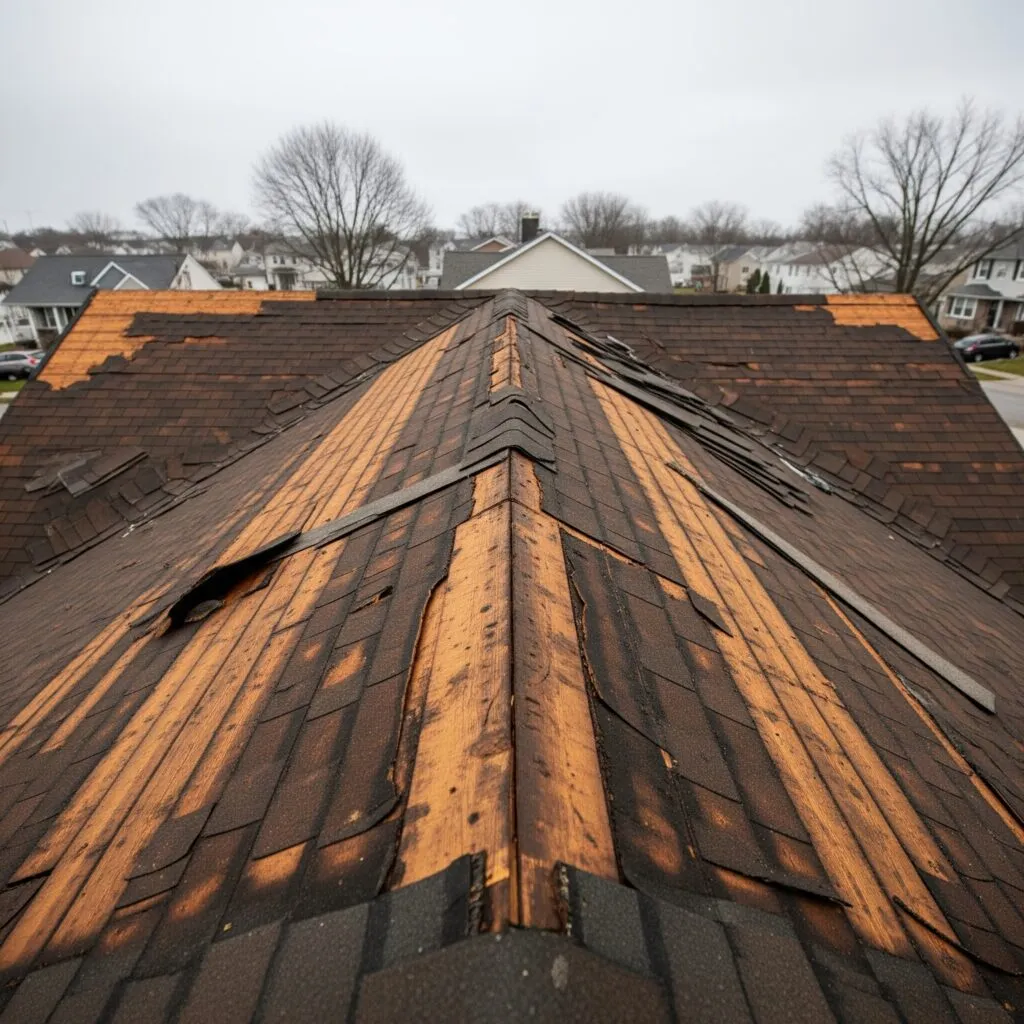
The photograph featured in this project provides a clear look at why professional roofing preparation matters. The existing shingles show significant weathering and deterioration, with large areas where the original surface has become visibly worn. Several sections reveal exposed wood beneath the roofing materials, showing the difference between the existing roofing system and the surface that may need to be prepared before new materials are installed.
This type of project demonstrates the importance of approaching a roof replacement as a complete roofing system rather than simply a cosmetic improvement.
At ALL PRO Roof Repair & Installation, the company’s published roofing services include roof repair, roof replacement, roof installation, roof leak repair, flashing repair, roof construction, asphalt shingle roofing, flat roofing, skylight services, and other roofing solutions. The company also publishes that it offers inspections and free estimates.
Understanding the Need for Roof Replacement
Every roof has a service life, and roofing materials can eventually show visible signs of aging, weather exposure, and deterioration.
The decision between repair and roof replacement depends on several factors. These can include the overall condition of the shingles, the frequency of leaks, the extent of visible damage, the condition of the underlying roof deck, and the number of areas that have already required repair.
When roofing deterioration is widespread, repeatedly repairing individual areas may not address the condition of the roofing system as a whole. A professional inspection can help determine the extent of the problem and identify the appropriate course of action.
The important point is that replacement decisions should be based on the condition of the complete roofing system rather than on appearance alone.
What the Photograph Reveals About the Existing Roof
The featured photograph shows an aging roof with extensive discoloration, worn shingles, exposed surfaces, and areas where roofing materials have deteriorated.
The most noticeable feature is the extensive wear visible along the roof planes. The shingles do not appear consistent across the entire surface, and several areas show displaced or damaged materials. Some sections also expose the underlying wood surface, making the condition beneath the roofing easier to see.
This type of visual evidence is important during a roof replacement project because the contractor needs to understand what exists beneath the finished roofing material.
A roof can appear intact from ground level while still having problems that are more apparent during a closer professional inspection.
Once the existing materials are removed, the roofing team can examine the underlying surface and determine what preparation is required before continuing.
Preparing for a Roof Replacement
Good preparation is the foundation of every successful roof replacement.
The first major task is generally the removal of the existing roofing materials. This process has to be handled carefully so that the crew can expose the roofing surface without unnecessarily damaging areas that are intended to remain part of the structure.
On larger or more complex roofs, preparation may involve working across multiple slopes, ridges, valleys, roof intersections, and other architectural features.
The roof shown in the photograph contains several changes in direction and elevation. These features make preparation particularly important because the new system has to transition correctly across each section of the structure.
Professional preparation also provides a better opportunity to identify damaged decking or other components that may need attention before the new roofing materials are installed.
Inspecting the Roof Deck
The roof deck is an essential part of the roofing assembly.
It provides the surface beneath the underlayment and shingles, which means the new roofing system needs an appropriate foundation beneath it.
During a roof replacement, areas of decking that show deterioration or damage can become visible after the old materials have been removed. The photograph demonstrates why this stage matters: once roofing materials are no longer covering the surface, the condition of the wood can be evaluated more directly.
A careful inspection can help the roofing team determine which portions are suitable for continued installation and which areas require repair or replacement.
This is one of the major differences between simply covering an old roof and carrying out a properly planned replacement project.
The objective is to prepare a sound, consistent surface before the new roofing system is installed.
Installing the Protective Roofing Components
After the roof deck has been evaluated and prepared, the installation can move toward the components that sit beneath the finished shingles.
These components form an important part of the roofing system and work together with the shingles to help protect the structure.
Underlayment, edge details, flashing, and other roofing components must be installed according to the requirements of the specific system being used.
A professional roof replacement should therefore be viewed as a layered system.
The visible shingle surface is only one part of the complete assembly.
The attention given to the hidden layers can be just as important as the appearance of the finished roof.
Installing New Shingles Correctly
Once the roof has been properly prepared, new shingles can be installed.
Asphalt shingles are among the roofing options offered by ALL PRO, which also lists cedar shake, metal, flat roofing, TPO, PVC, roll roofing, and other roofing solutions among its services.
Regardless of the selected material, installation accuracy is critical.
Shingles need to be aligned consistently, installed with appropriate exposure, and properly integrated with the other components of the roofing system.
Straight lines and uniform spacing are important not only for appearance but also for maintaining a professional installation across the roof surface.
On a roof with multiple slopes, the installation requires careful coordination from one section to another.
The finished product should look consistent across the entire structure rather than appearing as a collection of disconnected sections.
Managing Roof Ridges, Valleys, and Transitions
Complex roof designs create additional installation challenges.
The roof shown in the image contains multiple planes that meet along ridges and transitions. These areas deserve particular attention during a roof replacement because water movement and material transitions have to be considered carefully.
Roof valleys, ridges, wall intersections, and other changes in direction are areas where different portions of the roofing assembly come together.
Proper flashing and related detailing can help manage these transitions and protect vulnerable areas.
ALL PRO specifically lists roof flashing repair among its roofing services, along with roof waterproofing, roof construction, and roof installation.
The goal of professional installation is to make every part of the roof function together as one complete system.
Why Professional Workmanship Matters
A roofing project may look straightforward when viewed from the ground, but the installation process can involve many technical details.
A professional roof replacement requires more than roofing materials and basic installation equipment.
The crew has to work safely on sloped surfaces while also maintaining accuracy throughout the installation. Measurements, layout, material handling, flashing, ventilation, roof penetrations, edges, valleys, and final details all contribute to the finished system.
This becomes even more important when the roof contains several slopes or architectural features.
The photograph provides an excellent example of this complexity. The central section rises toward a ridge, while the surrounding roof surfaces extend in different directions. A replacement therefore has to be planned around the actual structure rather than treated as one flat surface.
Professional workmanship means paying attention to these details throughout the project.
Roof Replacement Versus Repeated Repairs
Roof repair can be appropriate for localized problems.
For example, a limited leak, isolated flashing problem, or small area of damage may sometimes be addressed without replacing the entire roof.
However, when deterioration becomes widespread, the situation may be different.
The photograph shows broad areas of aging and damaged roofing rather than a single isolated defect. In a real project, a professional inspection would be needed to determine whether repair or roof replacement is appropriate.
ALL PRO’s roofing page identifies both roof repair and full roof replacement among its services and encourages homeowners to schedule a professional roof inspection.
This evaluation can provide a clearer understanding of the condition of the existing roof before a major decision is made.
Choosing Materials for a New Roofing System
Selecting the appropriate roofing material is another important part of a roof replacement.
Different roofing systems have different characteristics, appearances, installation requirements, and maintenance considerations.
A homeowner may consider traditional asphalt shingles, metal roofing, cedar shake, or another suitable system depending on the structure and project requirements.
ALL PRO lists several of these roofing systems among its published services, including asphalt shingle roofing, cedar shake roofing, metal roofing, TPO, PVC, torch-down roofing, roll roofing, and flat roofing.
The best material depends on the building, existing roof structure, design requirements, budget, and the recommendations made after an inspection.
A professional roofing contractor can help explain the practical differences between the available systems.
The Importance of Ventilation and Flashing
A complete roofing project should not overlook ventilation and flashing.
Roof ventilation plays a role in managing the conditions within the roofing system, while flashing helps protect important transition points around roof penetrations and intersections.
ALL PRO’s published services include solar attic vent installation, roof waterproofing, roof flashing repair, skylight repair, and skylight installation.
During a roof replacement, these components should be considered as part of the overall roofing plan rather than treated as unrelated details.
A new roof should function as an integrated system, with the visible shingles working together with the layers and components underneath them.
Final Inspection and Cleanup
The job is not finished simply because the last shingle has been installed.
A professional roof replacement should include a final review of the completed work.
This review can involve checking the visible roofing surfaces, transitions, ridges, valleys, penetrations, flashing, edges, and other installation details.
The property should also be cleaned of roofing debris and removed materials.
A final inspection provides an opportunity to identify details that may need attention before the project is considered complete.
This final stage is especially valuable on complex roofs because there are more individual sections and transitions to review.
A complete roofing project should finish with the same attention to detail that was applied during preparation.
Professional Roofing Services From ALL PRO
ALL PRO Roof Repair & Installation publishes a range of residential and commercial roofing services, including roof repair, roof leak repair, roof replacement, roof installation, roof framing, roof construction, asphalt shingle roofing, metal roofing, roof waterproofing, flashing repair, flat roof services, and skylight repair and installation.
The company also states that it provides professional roof inspections and free estimates, with emergency roofing services available as well.
For a property with an aging roofing system like the one shown in the photograph, the first step is understanding the actual condition of the roof.
A professional evaluation can help identify visible deterioration, possible leak-related concerns, damaged materials, and areas that require additional investigation.
From there, the appropriate repair or roof replacement plan can be developed around the property’s specific needs.
A Closer Look at This Roofing Project
The featured image is especially useful because it captures the difference between an aging roof and the type of preparation required before a new roofing system can be installed.
The deteriorated shingles show how roofing materials can change over time after prolonged exposure to weather.
The exposed sections reveal the underlying wood surface, illustrating why the condition of the roof deck should be considered during a replacement project.
The image also demonstrates how roof geometry can influence the complexity of the work. The multiple roof planes and central ridge require careful coordination during removal, preparation, flashing, and installation.
This is what makes a professional roof replacement more than a simple material change.
It is a complete roofing construction process that begins with assessment and preparation and ends with a finished system designed around the structure.
Conclusion
A professional roof replacement is a detailed process that involves far more than installing new shingles.
It begins with understanding the condition of the existing roof, removing old materials, inspecting the underlying deck, preparing the surface, installing protective components, placing the new roofing materials, completing transitions, and reviewing the finished system.
The photograph featured in this project provides a strong example of why these stages matter. The visible deterioration across the existing roof shows the importance of addressing the roofing system as a whole when damage and aging extend across multiple areas.
For homeowners evaluating an aging or deteriorated roof, a professional inspection can provide the information needed to determine whether targeted repairs or a complete replacement should be considered.
ALL PRO Roof Repair & Installation offers roofing services ranging from repairs and leak work to full roof replacement, installation, flashing work, waterproofing, and other roofing solutions.
A well-planned roofing project starts with careful evaluation and continues with professional attention to every stage of installation.