A chimney looks solid — stone, brick, mortar, it’s the last part of the house you’d expect to fail. But chimneys are actually one of the most common sources of hidden water damage in New Jersey homes. A small gap in flashing or a hairline crack in the crown can let water travel down through the chase and into your attic, ceilings, and walls for months before anyone notices. By the time a stain shows up on the ceiling, the damage is often already extensive.
This guide walks through exactly why chimneys leak, the six warning signs that mean you need chimney leak repair now rather than later, what the fix typically costs in New Jersey, and how to choose a contractor who will actually solve the problem instead of just patching it.
What Causes a Chimney to Leak?
Before jumping into chimney leak repair, it helps to understand where the water is actually getting in. A chimney is essentially a masonry tower sitting on top of your roof, and it has several vulnerable points where water can find its way inside:
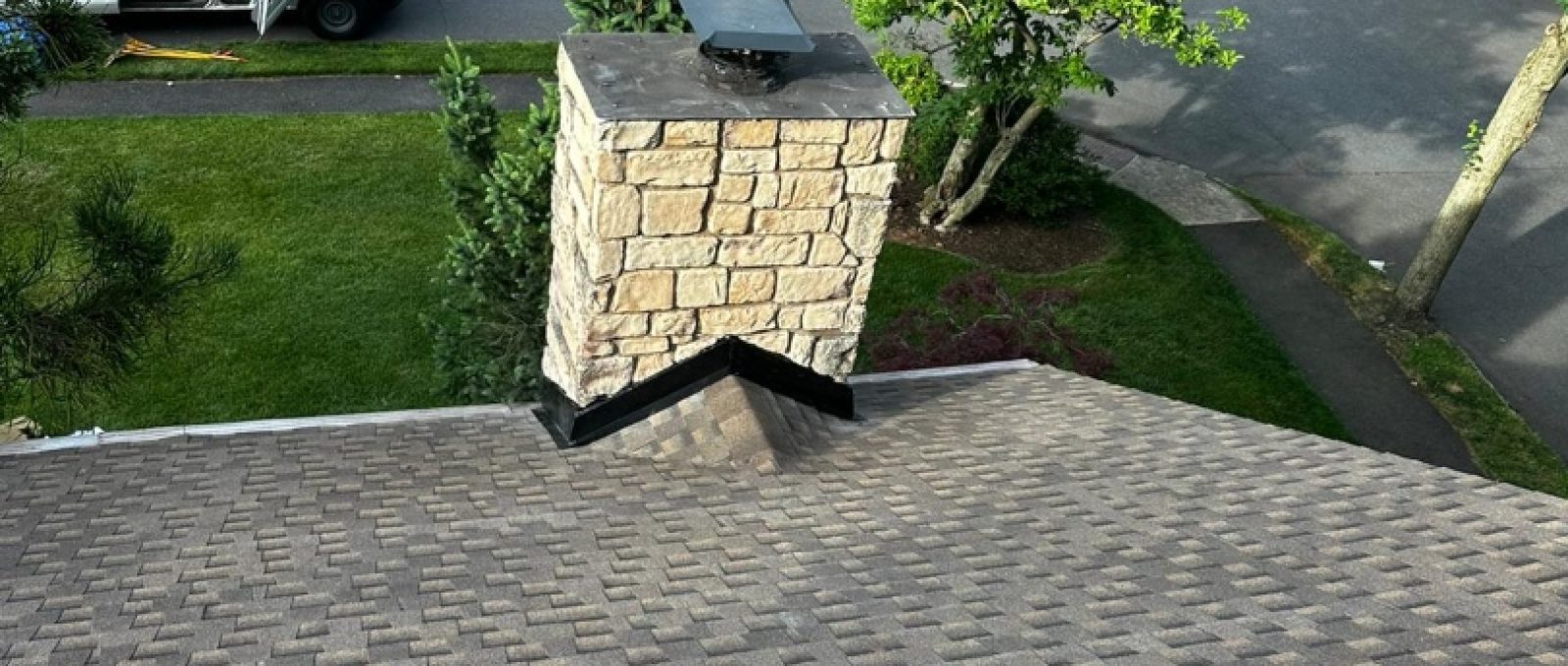
- Flashing — the metal strip where the chimney meets the roofline, visible as the dark, angled material in the photo above.
- Crown — the concrete cap on top of the chimney that’s supposed to shed water away from the flue.
- Mortar joints — the material between bricks or stones, which naturally erodes over years of freeze-thaw cycles.
- Chimney cap — the cover over the flue opening that keeps rain from pouring straight down the chimney.
New Jersey’s climate makes all four of these especially vulnerable. Winters bring repeated freeze-thaw cycles that widen small cracks, while humid summers and heavy storms push water into any gap that’s already there.
6 Warning Signs You Need Chimney Leak Repair
1. Water Stains Around the Chimney
Brown or yellow staining on the ceiling or wall near your chimney is usually the first sign homeowners notice — and it almost always means water has already been getting in for a while.
2. Rusted or Damaged Damper
If your fireplace damper is rusted, hard to open, or visibly corroded, water has likely been dripping down the flue for some time. This is a strong indicator that chimney leak repair is overdue.
3. Crumbling Mortar or Brick
Mortar joints that are soft, crumbling, or missing chunks let water soak directly into the masonry. Over time this weakens the entire chimney structure, not just the surface.
4. White Staining (Efflorescence) on the Exterior
That chalky white residue on brick or stone chimneys is called efflorescence, and it’s a clear sign that moisture is moving through the masonry and depositing mineral salts on the surface as it evaporates.
5. Musty Odor or Visible Mold
A persistent musty smell near the fireplace, or actual mold growth around the chimney chase, points to ongoing moisture intrusion — even if you haven’t seen a drip yet.
6. Damaged Flashing
If you can see gaps, rust, or lifted sections in the flashing around the chimney base, that’s often the exact spot water is entering — and it’s one of the most common reasons homeowners end up needing chimney leak repair in the first place.
Chimney Flashing: The Most Common Cause of Leaks
Look closely at the photo above and you’ll notice the dark, step-shaped flashing wrapping tightly around the base of the chimney where it meets the shingles. This detail does more work than almost any other part of the chimney system — it’s the barrier that keeps water from running down the sides of the masonry and into the roof deck below.
Flashing fails for a few predictable reasons:
- Improper installation — flashing that wasn’t properly layered under the shingles from the start.
- Age and corrosion — metal flashing thins and rusts over 15-20 years, especially in coastal or humid areas.
- Roof movement — settling or thermal expansion can pull flashing away from the chimney over time.
- Sealant breakdown — the caulk or sealant used at flashing seams dries out and cracks long before the metal itself fails.
Because flashing sits at the intersection of two different roofing systems — the chimney and the shingles — it’s also one of the trickiest repairs to get right, which is exactly why it should be handled by a professional rather than a quick DIY caulk job.
How Much Does Chimney Leak Repair Cost in NJ?
Costs vary quite a bit depending on what’s actually causing the leak:
- Flashing repair or replacement: typically the most common and most cost-effective fix when caught early.
- Crown repair: ranges from a simple sealant coating to a full crown rebuild, depending on how much damage has occurred.
- Repointing (mortar repair): priced by the linear foot of mortar joint that needs to be redone.
- Chimney cap installation: a relatively inexpensive fix that prevents a major source of water intrusion.
- Full chimney rebuild: the most expensive option, needed only when structural damage has gone unaddressed for years.
The honest answer is that an accurate number requires a physical inspection — a chimney that looks fine from the ground can hide serious issues that only show up on the roof itself. A free, in-home estimate is always going to be more reliable than a phone quote.
DIY vs. Professional Chimney Leak Repair
It’s tempting to grab a tube of roofing sealant and call it done, and for very minor surface cracks that can occasionally buy some time. But most chimney leak repair work isn’t a good candidate for DIY, for a few reasons:
- Working at height on a roof is genuinely dangerous without the right equipment and experience.
- The real cause is often hidden. A leak that appears at the chimney base might actually originate higher up at the crown, and treating the wrong spot wastes time while water damage continues.
- Improper sealant application can trap moisture rather than release it, sometimes making the underlying problem worse.
- Flashing work requires removing and re-lacing shingles correctly — a job that, done poorly, can void a roof warranty.
A professional inspection identifies the actual source before any repair begins, which is the difference between a fix that lasts and one that needs to be redone within a year.
Why Ignoring a Leaking Chimney Gets Expensive Fast
A small chimney leak rarely stays small. Left unaddressed, water intrusion typically progresses in stages:
- Minor staining on ceilings or walls near the chimney.
- Wood rot in the roof decking and rafters surrounding the chimney chase.
- Mold growth in the attic space, which can spread to insulation and drywall.
- Structural damage to the chimney itself, from frozen and expanding water inside cracked masonry.
- Full chimney rebuild, which costs significantly more than any of the repairs that could have prevented it.
Catching the problem at stage one — with prompt chimney leak repair — is almost always a fraction of the cost of addressing it at stage four.
Choosing the Right Chimney Leak Repair Company
Not every roofing contractor is equally comfortable with chimney work, since it combines roofing, masonry, and flashing expertise. When evaluating a company for chimney leak repair, look for:
- Combined roofing and masonry experience. Chimney leaks almost always involve both the roofline and the masonry structure, so a contractor who only does one or the other may miss the full picture.
- Licensed and insured. This protects you if anything goes wrong during work performed on your roof.
- Manufacturer certifications, such as GAF or CertainTeed credentials, which usually indicate a higher standard of installation practice.
- A written, itemized estimate that identifies the specific cause of the leak — not just a generic “we’ll seal it” quote.
At All Pro Roofing and Chimney, our team handles the full scope of chimney work — from flashing and crown repair to complete masonry rebuilds — which means the same crew diagnosing your leak is the one fixing it, rather than passing you between separate roofing and masonry contractors.
Preventing Future Chimney Leaks
Once your chimney leak repair is complete, a few habits go a long way toward keeping it that way:
- Schedule an annual chimney inspection, ideally before the heating season starts each fall.
- Clean gutters regularly near the chimney so water doesn’t pool and back up against the base.
- Watch for staining after every major storm, since new leaks tend to show up first as small, easy-to-miss marks.
- Have your chimney cap and crown checked every few years, since these are the two components most exposed to direct weather.
- Don’t ignore small cracks in mortar — a quick repointing job now is far cheaper than a rebuild later.
The Chimney Safety Institute of America recommends annual chimney inspections for exactly this reason — most serious chimney problems, including leaks, are far easier and cheaper to catch early than to repair after they’ve caused structural damage.
Frequently Asked Questions About Chimney Leak Repair
How do I know if my leak is coming from the chimney and not the roof itself?
Water stains that appear specifically around the chimney’s location, rather than spread across the ceiling, are a strong indicator the chimney — not the roofline — is the source. A professional inspection can confirm exactly where the water is entering.
Can a chimney leak happen even if I never use my fireplace?
Yes. Chimney leaks are structural, related to flashing, mortar, and the crown — they have nothing to do with whether the fireplace is in use.
Is chimney leak repair covered by homeowners insurance?
Sometimes, if the damage stems from a covered event like storm damage. Damage from long-term wear or lack of maintenance is typically not covered, which is another reason to address issues early.
How long does a typical chimney leak repair take?
Flashing repairs and crown sealing are often completed in a single day. More extensive repointing or rebuild work can take longer depending on the extent of the damage.
Schedule Your Free Chimney Leak Repair Estimate
If you’ve noticed any of the warning signs above — staining, crumbling mortar, a musty smell, or visible flashing damage — it’s worth getting ahead of it before the next storm. All Pro Roofing and Chimney has been serving homeowners across New Jersey with combined roofing, chimney, and masonry expertise, and every estimate is free with no obligation.
Visit our chimney services page to learn more, or request your free estimate online today.
📞 Call (201) 773-6635 or email info@allprosnj.com — same-day service available.